St Homobonus and the Catholic Tradition of Ethical Work
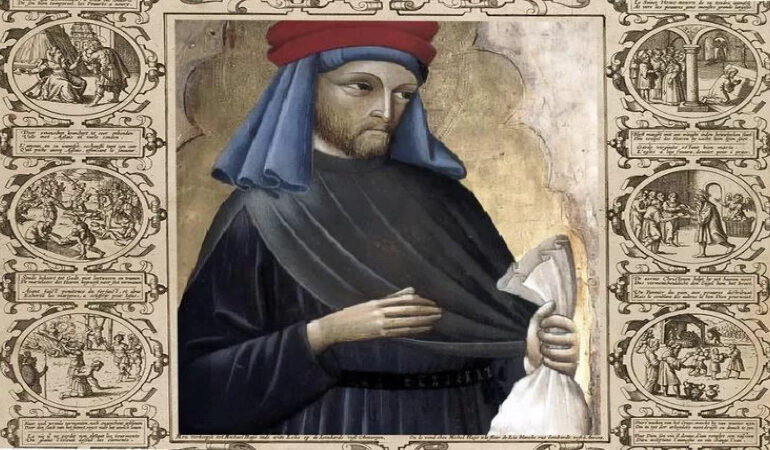

The Catholic Church continues to hold up St. Homobonus as a historical example of how professional life, economic success, and social responsibility can coexist within Christian discipleship. Born Omobono Tucenghi in twelfth century Cremona, in northern Italy, Homobonus was a married layman who worked as a tailor and merchant, inheriting a prosperous business from his family. Contemporary accounts describe him as deeply committed to honesty in trade and generosity toward those in need, viewing his financial success as a responsibility rather than a personal achievement. His life is often cited in Church teaching as an early model of lay holiness rooted not in withdrawal from the world but in ethical engagement with it, particularly in commerce and daily labor.
Historical sources note that Homobonus and his wife adopted a deliberately simple lifestyle, choosing modest housing and clothing so that a significant portion of their income could be directed toward charitable works. He was known for assisting the poor of Cremona, providing financial support to families in hardship and covering burial expenses for those who died without means or relatives. His actions reflected a social vision in which wealth carried moral obligations, a theme that continues to feature prominently in Catholic social thought. Church historians emphasize that his charitable activity was not sporadic but systematic, integrated into his business practices and personal discipline, reinforcing the idea that economic life can serve the common good when guided by conscience and solidarity.
Alongside his professional life, Homobonus was also remembered for consistent religious observance. Accounts describe him as attending Mass daily and maintaining a disciplined prayer life while remaining fully engaged in family and civic responsibilities. In November 1197, he died during a liturgical celebration while praying in the cathedral, an event that contributed to his reputation for holiness among the local population. The rapid response of the faithful led to his canonization just over a year later by Pope Innocent III, an unusually swift process that reflected strong popular recognition rather than institutional promotion. In the formal declaration, the Pope described Homobonus as a figure of peace, charity, and fidelity expressed through ordinary life.
Today, St Homobonus is recognized as the patron saint of businesspeople, tailors, and artisans, as well as of the city of Cremona, where his remains are preserved in the cathedral. His annual feast is observed on 13 November. Church commentators continue to reference his life in discussions about ethical business conduct, responsible wealth, and the vocation of the laity. Within a modern context marked by economic inequality and debates over corporate responsibility, his legacy is often presented as a reminder that professional success and moral accountability are not opposing ideals, but complementary dimensions of Christian witness in society.