Indian bishops elect Dalit cardinal Anthony Poola as conference president in historic vote
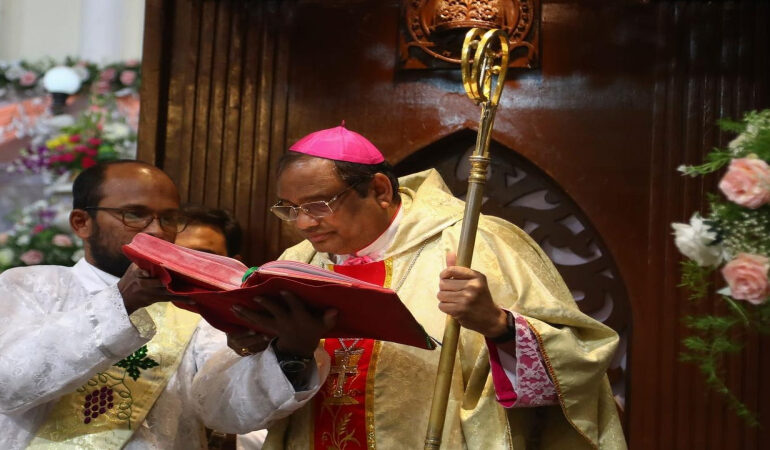

In a landmark moment for the Catholic Church in India, the Catholic Bishops’ Conference of India has elected Cardinal Anthony Poola as its new president, making him the first Dalit cardinal to lead the national bishops’ body. The election is widely seen as a powerful symbolic and pastoral step in a country still grappling with the social legacy of caste discrimination.
Cardinal Poola, who serves as Archbishop of Hyderabad, was chosen during the 37th general body meeting of the bishops, held at St John’s Medical College in Bengaluru. The election was conducted by secret ballot and brought together bishops from India’s three ritual Churches, Latin, Syro Malabar and Syro Malankara. He will succeed Archbishop Andrews Thazhath of Trichur, who completed a four year term marked by significant internal and external challenges for the Church.
Born into the Dalit community, traditionally regarded as outside India’s historic caste system, Poola’s election carries deep significance. The term Dalit, derived from Sanskrit words meaning broken or crushed, refers to communities that for centuries were subjected to exclusion, exploitation and violence. Although India formally abolished caste discrimination in its 1948 constitution and introduced affirmative action policies, caste based inequality continues to shape social realities across the country.
Poola himself has often spoken about both progress and persistent struggles faced by Dalits and other marginalized groups. After being created cardinal in 2022, he noted that while opportunities have expanded, many still fight for recognition of their abilities and contributions. His leadership is therefore seen by many as a sign of hope for greater inclusion within both Church and society.
In addition to being the first Dalit cardinal, Poola is also the first Telugu speaking cardinal. Telugu is spoken by nearly 100 million people, mainly in the southeastern states of Andhra Pradesh and Telangana, giving his leadership added resonance for large Catholic communities in those regions.
Reacting to the election, Bishop Sarat Chandra Nayak of Berhampur, chair of the CBCI Office of Scheduled Castes and Scheduled Tribes, described the vote as a clear and prophetic message. He said it affirmed that Dalits and tribal communities can lead the Church at every level and emphasized that there is no partiality before God.
In his message following the election, Cardinal Poola expressed gratitude for the trust placed in him by his brother bishops and thanked Catholics across India for their prayers and support. He said he accepted the role with humility, recognizing that leadership in the Church is a form of service rooted in listening, prayer and shared discernment.
Looking ahead, Poola pledged to work with fellow Church leaders to strengthen unity among the Churches in India, deepen Christian communion and build closer bonds with the wider society. In a period marked by division, violence and social tension, he said the Church must be a sign of reconciliation, dialogue and hope.
The CBCI described his election as coming at a crucial moment for the Church in India, highlighting his decades of pastoral experience, administrative leadership and commitment to faith, justice and human dignity. For many observers, his presidency represents not only a personal milestone but also a broader call to a more inclusive and prophetic Church.