

Michelangelo’s The Last Judgment begins careful three month cleaning inside the Sistine Chapel
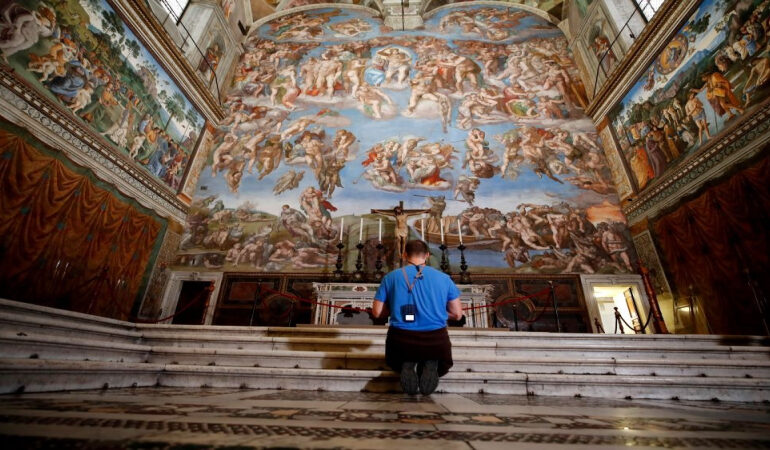

One of the most powerful images in Western Christian art is receiving renewed care as Michelangelo’s The Last Judgment undergoes a three month cleaning inside the Sistine Chapel. Vatican officials confirmed that the project marks the first major restoration of the fresco in more than three decades, aimed at preserving the work amid the pressures of mass tourism.
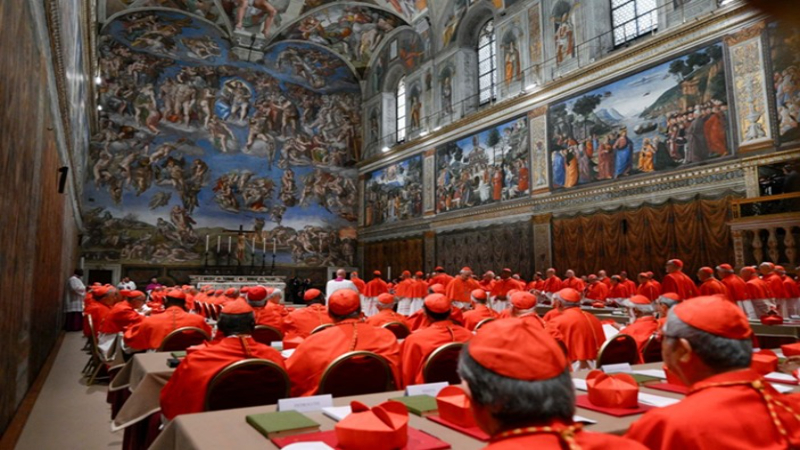
The monumental fresco dominates the wall behind the altar of the Sistine Chapel and portrays Christ judging the living and the dead in a dramatic vision of heaven and hell. Painted between 1536 and 1541 by Michelangelo, the work has long been a focal point for pilgrims, art historians and visitors drawn to the Vatican from around the world.
According to the Vatican Museums, the cleaning will focus on removing a thin but widespread layer of microparticles that has accumulated on the plaster over time. This haze is caused by airborne particles carried by constant air movement generated by the daily flow of visitors. Museum experts described it as a whitish film that dulls the surface of the painting and must be carefully removed to protect the original colors and details.
Despite the restoration work, the Sistine Chapel will remain open throughout the three month period. Scaffolding has been installed in front of sections of the fresco, partially obstructing the view at times, but officials said closing the chapel entirely was not considered necessary. The Vatican has emphasized that the cleaning is part of ongoing preventive conservation rather than an emergency intervention.
More than six million people pass through the Vatican Museums each year, with the Sistine Chapel consistently ranked as the most visited space. The intense foot traffic places enormous strain on the delicate environment of the chapel. Temperature, humidity and air quality are constantly monitored, and the Vatican has invested heavily in climate control systems to reduce long term damage to the artwork.
The Sistine Chapel itself has a layered papal history. It was constructed in the late 15th century under Pope Sixtus IV, whose name it bears, as the principal papal chapel. Decades later, Pope Julius II commissioned Michelangelo to paint the chapel’s ceiling, including the iconic Creation of Adam, completed between 1508 and 1512. The artist later returned to Rome to create The Last Judgment, a work that reflected a darker and more intense spiritual vision shaped by personal struggle and the turbulence of the era.
The fresco has endured centuries of exposure, neglect and controversy. It survived smoke from candles, structural changes to the chapel and earlier restoration efforts, including the extensive cleaning completed in 1994. That project sparked debate among scholars over color choices and artistic intent, making the current intervention notably cautious and limited in scope.
Vatican officials say the goal is simple but essential: to ensure that future generations can continue to encounter the fresco in a state as close as possible to what Michelangelo intended. For many visitors, the sight of pilgrims kneeling in silence beneath The Last Judgment remains a powerful reminder that the chapel is not only a museum, but a living sacred space where art, faith and history converge.