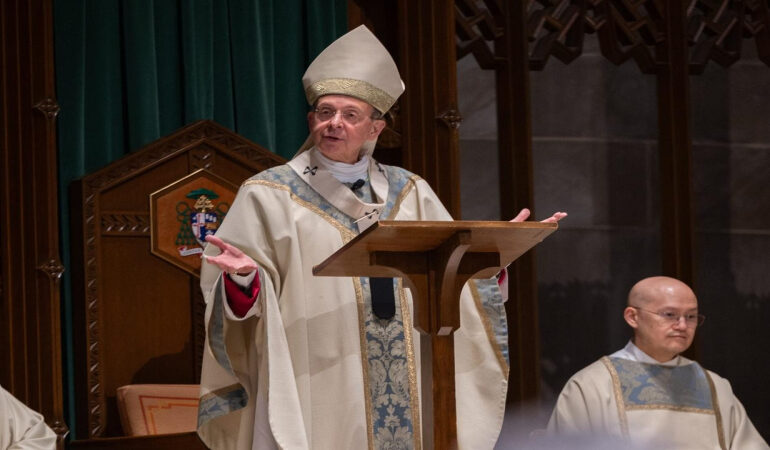

Archbishop William E. Lori of Baltimore has issued a wide ranging pastoral letter calling for a renewal of political culture in the United States, urging Catholics to engage public life with charity, truth, and a renewed commitment to the common good. The letter, released on February 9, is titled In Charity and Truth Toward a Renewed Political Culture and coincides with preparations for the 250th anniversary of American independence.
Archbishop Lori frames the anniversary as a moment that carries both responsibility and opportunity. He writes that remembrance of the nation’s founding should not be limited to reflection on the past, but should orient citizens toward moral renewal and deeper accountability for the future. In his view, faith has an essential role to play in shaping public discourse, especially during a period marked by polarization and social fragmentation.
Drawing on the teachings of Pope Leo XIV, Pope Francis, and Pope Benedict XVI, the archbishop presents a sober assessment of the current political environment. He describes today’s public discourse as increasingly toxic, characterized by hostility, threats of violence, and ideological extremes on both the left and the right. According to Lori, this climate reflects not only political division but also a deeper cultural and spiritual crisis.
At the heart of the problem, the archbishop argues, is a wounded understanding of the human person. When society forgets that every individual is created in the image of God, political life becomes a struggle for power rather than a shared pursuit of the common good. In such a context, opponents are no longer seen as neighbors, but as obstacles or threats.
Lori proposes synodality as a concept that may offer wisdom for civic life, even though it originates within the Church. Properly understood, he says, it encourages listening with humility, speaking honestly, and walking together despite disagreement. While he cautions that the Church and a secular democracy operate differently, he insists that no political objective justifies the cost of a fractured people or the loss of shared humanity.
A significant portion of the letter is dedicated to the cardinal virtues of prudence, justice, fortitude, and temperance. Lori describes these virtues as a shared moral language that transcends party affiliation and enables genuine cooperation. He emphasizes civic friendship as a stable commitment to truth and mutual belonging, not sentimentality. Such friendship, he writes, is essential for overcoming polarization and fostering trust.
To illustrate faithful citizenship, Lori points to figures such as Blessed Michael McGivney, founder of the Knights of Columbus, and Saint Frances Xavier Cabrini, who served immigrants and the poor. He also highlights Saints Thomas More and John Fisher as models of courage and integrity in public life.
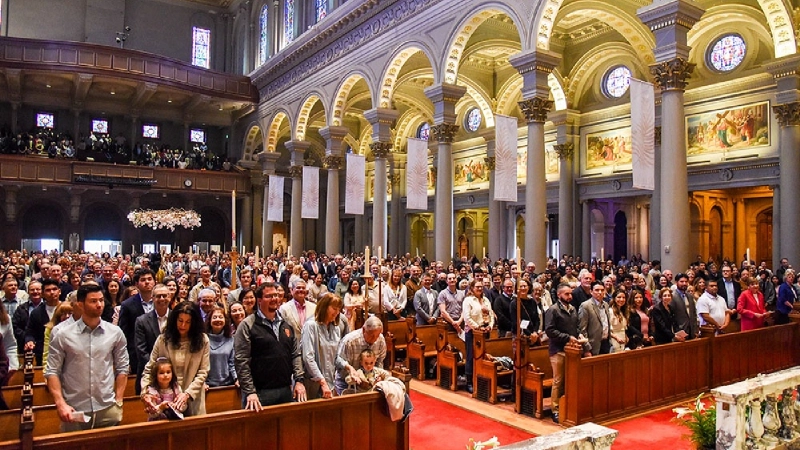
The archbishop concludes by reminding Catholics that the Church does not exist to win elections but to form consciences. In times of upheaval, he writes, the Church remains a sacrament of unity and a witness to hope, calling believers to resist despair and work patiently for the healing of the nation.