



Heidi Kühn’s Vision Turns Former Minefields Into Thriving Farmland Across the World

In regions once defined by war and hidden explosives, crops are now growing where land mines once made life impossible. This transformation is the result of a vision pursued for nearly three decades by Heidi Kühn, founder of the international humanitarian organization Roots of Peace. Her approach is simple in concept but demanding in execution: remove land mines and unexploded ordnance, then restore the land through agriculture that can sustain families and rebuild local economies.
In many post conflict zones, the end of fighting does not mean safety. Fields remain lethal, communities cannot return home, and farming becomes impossible. Roots of Peace works by partnering with professional demining teams to clear contaminated land and then introducing high value crops such as fruit trees, vineyards, and spices. Kühn often summarizes the model with a phrase that has become synonymous with her mission, turning mines into vines.
Founded in 1997, Roots of Peace has operated in more than a dozen countries including Afghanistan, Vietnam, Cambodia, Croatia, Angola, Iraq, Yemen, and Guatemala. According to the organization, its programs have helped plant millions of trees, supported hundreds of thousands of farmers, and managed more than two hundred million dollars in development initiatives funded by governments, international institutions, and private donors.
Kühn does not describe herself as a technical expert. Instead, she traces the origin of her work to personal experience and faith. A cancer survivor and mother of four, she has said her commitment grew from a belief that life saved carries responsibility. She has often drawn a parallel between illness and land mines, both unseen, indiscriminate, and destructive, and both requiring removal before healing can begin.
Roots of Peace began modestly, operating out of Kühn’s home in California. Early support came from unexpected quarters, including vineyard owners in Napa Valley who saw potential in linking agriculture to peacebuilding. Over time, partnerships expanded to include international donors and government agencies.
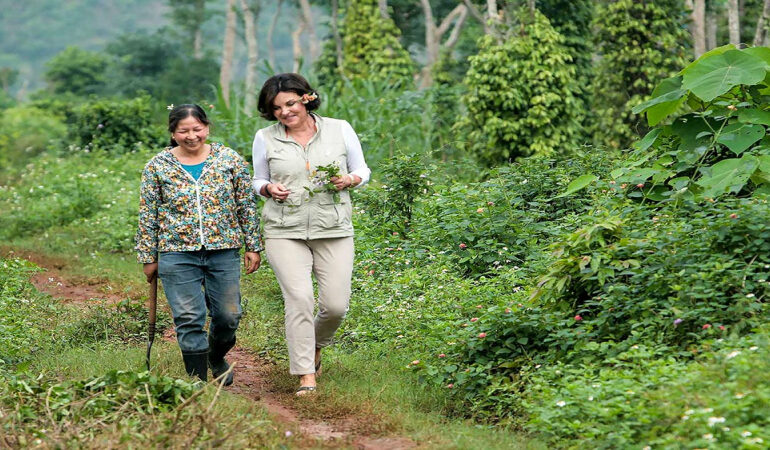
In Vietnam’s Quang Tri province, one of the most heavily bombed areas during the war, Roots of Peace focused on black pepper cultivation after land clearance. Local agronomists trained farmers in modern techniques, helping them shift from subsistence to market oriented agriculture. Similar strategies were applied in Afghanistan, where grape cultivation had deep historical roots. There, the organization helped establish orchards and vineyards on cleared land, providing an alternative to instability and illicit economies.
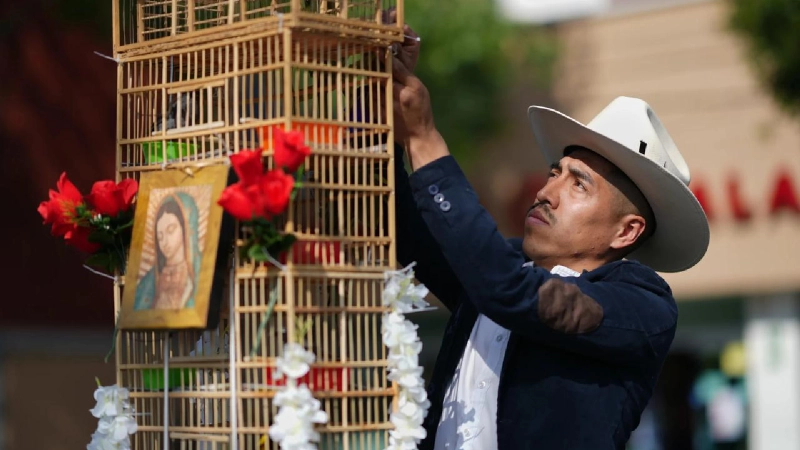
In Guatemala, where the legacy of civil conflict remains visible despite the absence of minefields, Roots of Peace has concentrated on improving food security and incomes for Indigenous farmers. By introducing irrigation systems and crop diversification, smallholders have been able to significantly increase yields while maintaining staple food production for their families.
The work has increasingly become a family effort. Kühn’s husband left a corporate career to support the mission, while her children have taken on leadership and fundraising roles. Despite decades of progress, Kühn emphasizes that the challenge remains vast, with tens of millions of land mines still buried worldwide and new conflicts adding to the problem.
For Kühn, the work is not only about land but about restoring dignity and hope. Clearing soil allows communities to return, but restoring livelihoods allows peace to take root in everyday life.