


Kansas ICE Detention Center Moves Closer to Opening Amid Objections from Local Catholics

A proposed U.S. Immigration and Customs Enforcement detention center in Leavenworth, Kansas, is moving closer to opening despite vocal opposition from local Catholic leaders and community members who argue the facility raises concerns about human dignity, public safety and financial impact.
On February 2, the Leavenworth Planning Commission voted 5 to 1 to approve a special use permit requested by CoreCivic, a private corrections company, to operate a 1,000 bed ICE detention facility for undocumented immigrants. The site is a former federal prison previously managed by CoreCivic that was closed in 2021 following a Justice Department audit that cited chronic understaffing, violence, infrastructure failures and limited cooperation with local authorities.
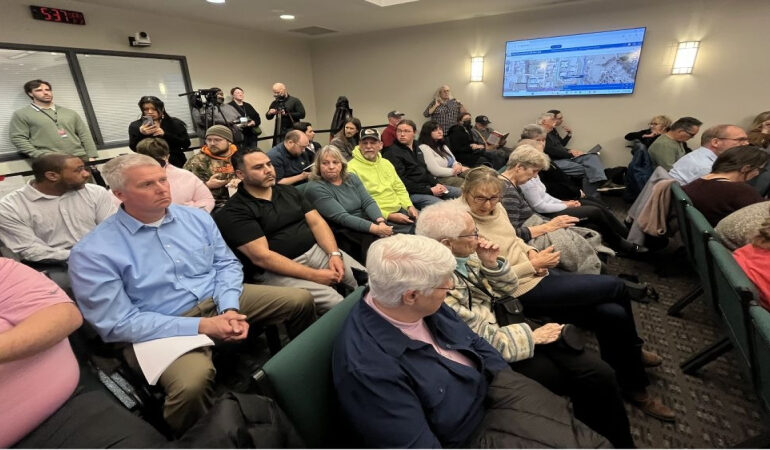
Members of the Sisters of Charity of Leavenworth were among those who attended the public hearing, urging officials to reject the proposal. Sister Jean Anne Panisko addressed the commission, arguing that reopening the facility would impose financial and public safety burdens on the city while offering limited and unstable economic benefits. She warned that municipal services and emergency response systems could be strained, with costs falling on local taxpayers.
Other representatives of the religious community echoed concerns about the company’s track record. John Shively, executive director of mission for the Sisters of Charity, questioned whether CoreCivic could be trusted to meet its commitments, citing previous issues with maintenance and coordination with city services. Several sisters attended the hearing in person, while others followed proceedings through an overflow video feed.
Community members also raised moral objections rooted in Catholic social teaching, emphasizing the Church’s call to uphold human dignity and protect vulnerable populations. Parishioners from nearby communities argued that immigration detention policies should reflect respect for fundamental human rights.
CoreCivic representatives responded by pledging improvements and greater transparency. Company officials acknowledged shortcomings in prior operations and agreed to revised permit conditions, including installation of a new sewer pump, reducing the permit duration from five years to three and clarifying city access provisions. The updated agreement specifies that local authorities must be granted access within two business days of written notice.
Supporters of the project, including current and former employees, testified that the facility would create approximately 300 jobs and contribute to the local economy. They emphasized company training standards and commitments to professional conduct.
Despite the planning commission’s approval, the issue is not yet settled. The Leavenworth City Commission is scheduled to review the permit later this month, with a final vote expected in March. Legal disputes between the city and CoreCivic are ongoing, and the matter has been argued before the Kansas Court of Appeals.
The debate in Leavenworth reflects broader national discussions about immigration enforcement, private detention facilities and the role of faith communities in public policy. As local officials weigh economic considerations against social and ethical concerns, the outcome will shape the future of immigration detention operations in the region.