


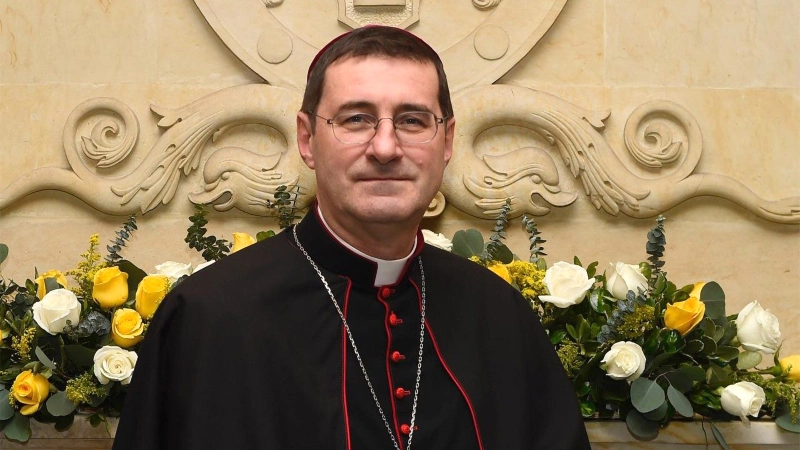

Vatican Diplomat Warns Against Financial Speculation Driving Food Price Volatility

A senior Vatican diplomat has raised concerns about the growing connection between financial speculation and rising food prices, warning that treating food as a financial asset risks undermining global food security and human dignity.
Archbishop Ettore Balestrero, the Holy See’s Permanent Observer to the United Nations and other international organizations in Geneva, addressed the issue during a recent meeting of leaders at the United Nations Conference on Trade and Development. Speaking to international representatives, he stressed that food is a fundamental requirement for human life and should not be reduced to a vehicle for profit driven market activity.
The archbishop said it is troubling that essential goods such as agricultural commodities are increasingly subject to financial instruments and speculative trading. According to him, when investors’ interests take precedence over the needs of farmers and consumers, access to basic necessities becomes vulnerable to market volatility. He described speculation on food prices as more than a technical market practice, arguing that it amounts to a gamble on the future of humanity.
Global food markets have experienced sharp fluctuations in recent years due to a combination of climate related disruptions, geopolitical tensions and supply chain challenges. Financial markets often amplify these swings, as investors move capital in response to anticipated shortages or shifting demand. Critics of commodity speculation argue that such activity can contribute to price spikes that disproportionately affect low income populations and developing nations.
Archbishop Balestrero emphasized that economic systems should prioritize the common good. He said markets must serve people rather than the other way around and called for reforms that ensure financial mechanisms do not undermine food accessibility. In his remarks, he underscored the importance of fair and affordable access to trade finance for poorer countries, noting that limited financial tools and credit access can further entrench inequality in global trade.
The Vatican representative also highlighted the principle of subsidiarity, a key concept in Catholic social teaching that supports decision making at the most appropriate local level while encouraging cooperation across nations. He argued that policies and investments aimed at strengthening food systems must be guided by collaboration and responsibility, ensuring that farmers receive just compensation and consumers can obtain food at stable and reasonable prices.
Food security remains a central issue in international development discussions. According to United Nations agencies, millions of people worldwide face acute food insecurity due to conflict, economic instability and environmental pressures. Rising prices for staple goods have intensified concerns about hunger and malnutrition in vulnerable regions.
By linking financial speculation with ethical considerations, the Holy See continues to advocate for economic structures rooted in human dignity. Archbishop Balestrero’s intervention reflects the Vatican’s broader engagement with multilateral institutions on matters of trade, development and social justice, urging policymakers to balance market efficiency with moral responsibility.