

Pope Leo XIV Emphasizes Church Authority in Safeguarding and Interpreting Sacred Scripture
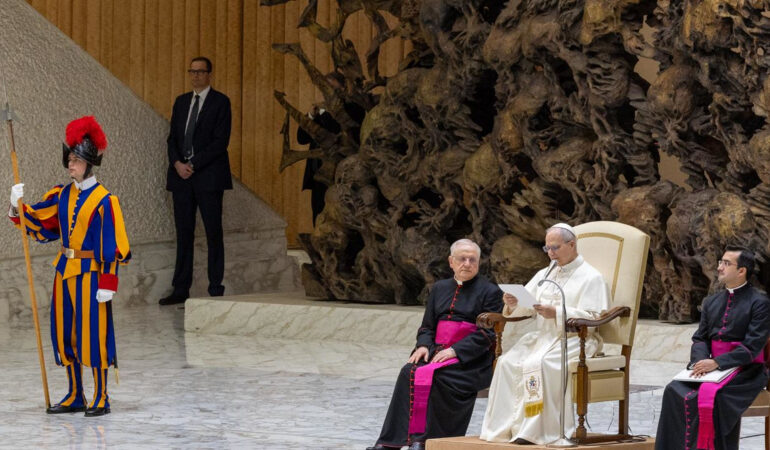

During his General Audience on February 11, Pope Leo XIV highlighted the institutional responsibility of the Catholic Church in safeguarding Sacred Scripture and ensuring its faithful interpretation. Speaking to pilgrims in the Paul VI Hall, he emphasized that the Bible is entrusted to the Church, which preserves its integrity and transmits its meaning through apostolic tradition.
The Pope reflected on the teachings of the Second Vatican Council, especially the Dogmatic Constitution on Divine Revelation, Dei Verbum. He explained that Scripture did not emerge in isolation but was born within the community of believers under the guidance of the Holy Spirit. For this reason, he said, the Church remains the rightful home of Sacred Scripture, the place where it is proclaimed, protected and authentically explained.
Pope Leo stated that the Word of God fulfills its purpose within the ecclesial community. The Church safeguards the unity of Scripture and prevents interpretations that detach biblical texts from the faith tradition that shaped them. He underlined that the responsibility for authentic interpretation rests with the Church’s teaching office, exercised by bishops in communion with the Bishop of Rome.
According to the Pope, Sacred Scripture and the sacramental life of the Church are closely connected. He recalled the teaching of Vatican II that the Church venerates the Scriptures just as she venerates the Body of the Lord. In the liturgy, believers receive spiritual nourishment from both the table of the Word and the Eucharistic sacrifice, forming a single act of worship that sustains the Christian community.
The Holy Father also referred to the 2008 Synod of Bishops dedicated to the Word of God in the life and mission of the Church. That synod reinforced the need for Scripture to remain central in pastoral activity, theological reflection and missionary outreach. He noted that authentic biblical interpretation takes place within the faith of the Church, which provides continuity and doctrinal stability across generations.
Pope Leo stressed that ministers of the Word, including bishops, priests, deacons and catechists, carry particular responsibility in transmitting Scripture faithfully. Their task is to remain rooted in the Church’s living tradition while guiding the faithful toward a deeper understanding of Christ. He said Scripture is not merely studied but lived within the Church’s teaching, prayer and service.
The Pope described Revelation as a dialogue in which God speaks to humanity. This dialogue unfolds within the structured life of the Church, where Scripture is proclaimed, interpreted and applied to the realities of contemporary life. Through preaching, catechesis and sacramental celebration, the Word of God continues to shape the Church’s identity and governance.
By situating Sacred Scripture within the institutional life of the Church, Pope Leo XIV reaffirmed that biblical authority and ecclesial authority are inseparable. In doing so, he underscored the Church’s enduring responsibility to guard the Word of God and ensure that it remains a source of truth and unity for believers worldwide.