


Ratzinger’s Vision of a Church That Welcomes Without Imposing Faith
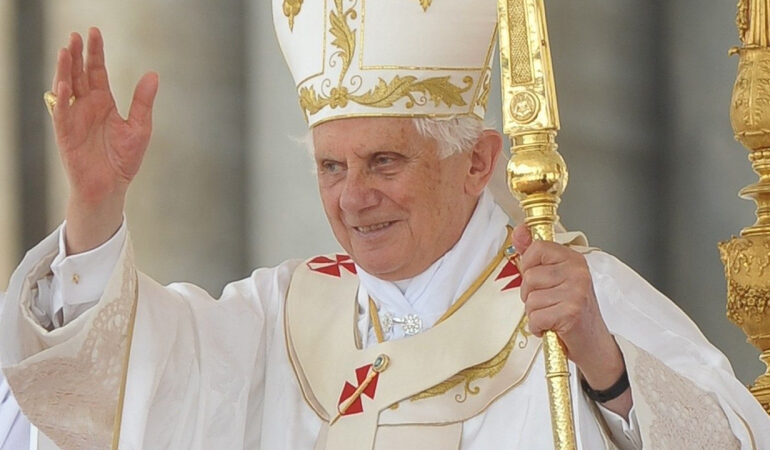

A newly published collection of writings by Joseph Ratzinger has drawn renewed attention to his pastoral vision of the Church as a welcoming presence that respects human freedom rather than imposing belief. The volume, titled The Faith of the Future, includes a homily delivered on November 29, 1981, when Ratzinger was Archbishop of Munich and just days away from beginning his service as Prefect of the Congregation for the Doctrine of the Faith.
In that homily, preached during the consecration of a parish church dedicated to Saint Monica in Munich’s Neuparlach district, Ratzinger reflected on the spiritual journey of Saint Augustine and the patient love of his mother. He described Monica not only as a holy parent but as an image of the Church itself. Through her, Augustine encountered faith not as a rigid system or distant institution, but as a living and personal reality.
Ratzinger emphasized that Augustine experienced the Church through the person of his mother. He cited Augustine’s own words, recalling how Monica gave him not only physical life but also a space of the heart where he could grow into maturity. For Ratzinger, this space was marked by trust, love, and meaning, elements necessary for any human being to move toward the future with hope.
The homily presents a vision of ecclesial life that goes beyond structures and administrative frameworks. Ratzinger cautioned against reducing the Church to offices and apparatus, noting that many people experience suspicion toward the Church precisely because it is often perceived as impersonal. Instead, he argued that the Church truly lives in persons who embody faith through relationship and presence.
Saint Monica’s approach to her son becomes central in this reflection. Augustine’s path was not the one she initially hoped for. He pursued philosophical ideas and personal choices that diverged from Christian teaching. Yet Monica chose patience rather than coercion. She endured the pain of watching him walk a different road, remaining close without restricting his freedom. In this waiting and openness, Ratzinger suggested, she transmitted faith more effectively than through force or argument.
The homily underscores that authentic faith cannot be imposed. Freedom is not an obstacle to belief but a necessary condition for it. By allowing Augustine the space to become himself, Monica created an environment where grace could work over time. This patient accompaniment, rooted in love, becomes for Ratzinger a model of how the Church should engage the modern world.
He described the Church as a space of life and hope where individuals feel at home. Rather than isolating itself in identity based communities or condemning the world, the Church is called to stand beside people in their struggles. Faith grows in personal encounter, not through pressure. The enduring relevance of this message continues to resonate in contemporary discussions about evangelization, freedom of conscience, and the pastoral mission of the Church.