

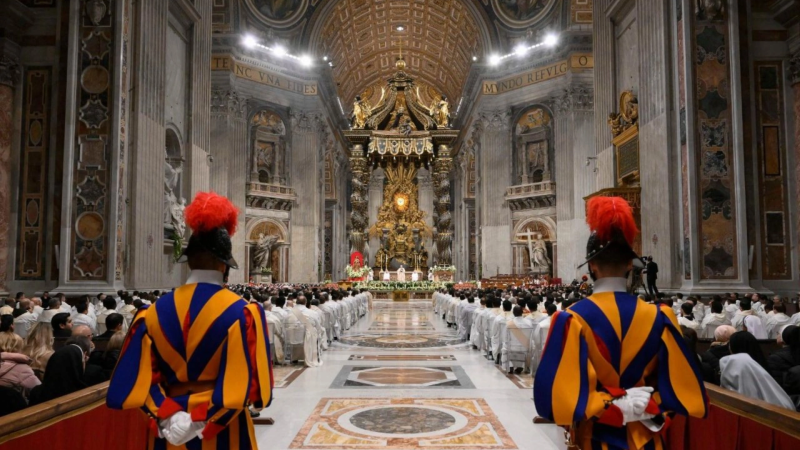
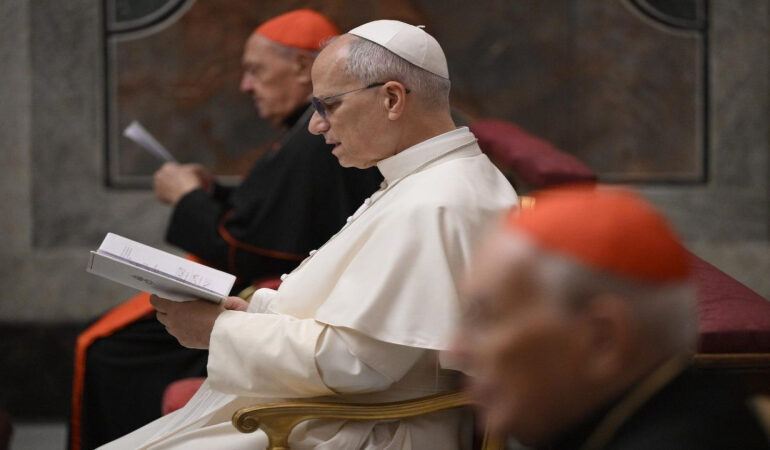

During the annual Lenten Spiritual Exercises at the Vatican, Bishop Erik Varden offered a profound meditation on spiritual failure, ecclesial corruption, and the path toward authentic renewal. Preaching before Pope Leo XIV, Cardinals residing in Rome, and heads of Dicasteries, the Bishop of Trondheim centered his sixth reflection on a verse from Psalm 90 that speaks of thousands falling at one’s side.
Bishop Varden began by distinguishing between falls that lead to humility and conversion and those that result in devastation. Some failures, he explained, can become milestones in a personal journey of salvation, revealing God’s power to restore. Others, however, carry far reaching consequences, bringing destruction not only to the guilty but also to many innocent people affected by their actions.
In a sober acknowledgment of recent decades, he stated that nothing has harmed the Church’s witness more deeply than corruption arising from within. The gravest crises, he noted, have not primarily come from secular opposition but from ecclesiastical wrongdoing. These wounds, he stressed, demand justice, repentance, and patient healing.
Addressing the temptation to simplify such crises, Bishop Varden cautioned against narratives that reduce complex realities to simple categories of monsters and victims. While recognizing that early warning signs are sometimes overlooked and that accountability is essential, he urged a more discerning approach. Not every community later marked by scandal began in hypocrisy. In some cases, authentic inspiration and genuine holiness were present at the outset.
Drawing on the thought of Saint Bernard of Clairvaux, Bishop Varden reflected on the Psalm’s imagery of the left and the right. The left, he explained, represents the carnal dimension of human nature, while the right signifies the spiritual. Paradoxically, greater casualties may occur on the spiritual side because those engaged in noble pursuits face intense spiritual trials. Progress in the spiritual life exposes deeper layers of vulnerability, including existential hunger and the desire for comfort.
He warned that when spiritual growth is not integrated with emotional and physical maturity, distortions can arise. Spiritual exposure, if not grounded, may seek unhealthy outlets that are later rationalized as elevated or justified. True integrity in spiritual leadership, he observed, is revealed not only in theological discourse but also in daily habits, relationships, and freedom from the pursuit of admiration.
The Bishop emphasized that the spiritual life is not separate from ordinary existence but its animating core. Any dualism that isolates spiritual aspiration from human embodiment distorts Christian faith. The Incarnation, he said, affirms that flesh and spirit must be united under Christ’s governance.
In calling listeners to vigilance on both the left and the right, Bishop Varden invited the Church’s leaders to cultivate balance, humility, and coherence in their lives, ensuring that faith permeates every dimension of human experience.