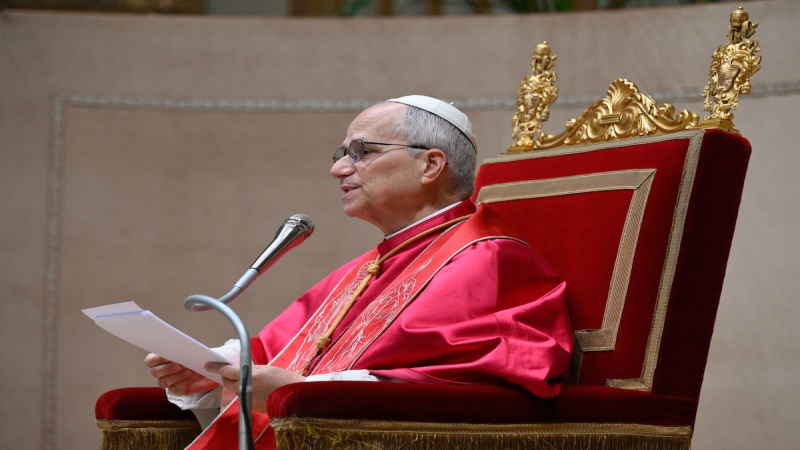

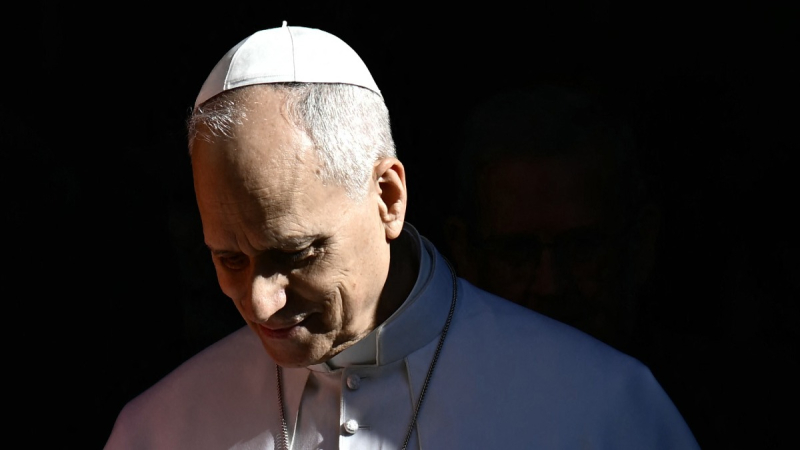
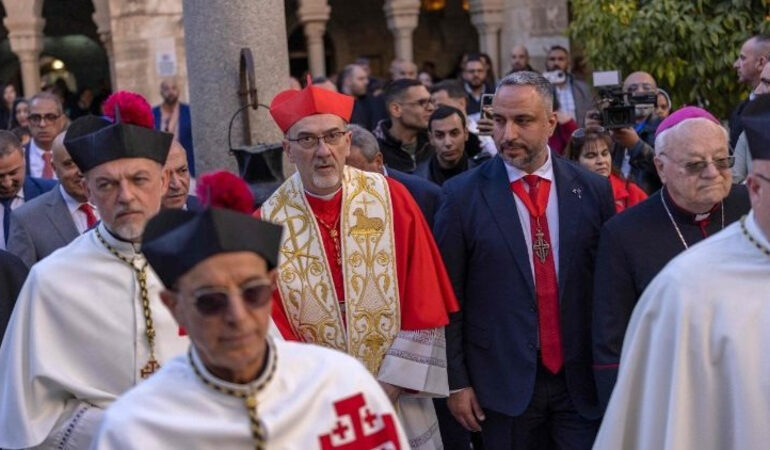

Speaking from Jordan, Pierbattista Pizzaballa has articulated a moral reflection that cuts across political borders and ongoing conflicts in the Middle East. Addressing unrest in Iran and the continuing devastation in the Gaza Strip, the Latin Patriarch of Jerusalem framed recent events around a shared human impulse toward life, dignity, and justice. His remarks came during a regional gathering of clergy, where the complexity of shepherding communities across multiple countries was evident. Rather than focusing on political solutions, the Patriarch emphasized the universality of human aspiration, warning that suppressing this desire through violence only deepens suffering. His words positioned the Church as a moral witness attentive to human cost rather than ideological alignment, especially in regions where protest, war, and economic hardship intersect with fragile social structures.
Reflecting on protests in Iran that erupted over worsening economic conditions, the Patriarch expressed concern that popular demands could deteriorate into further bloodshed. He described the longing for dignity and justice as inseparable from human identity, shared by individuals and communities alike. This perspective situates current unrest within a broader ethical framework that transcends national narratives. By emphasizing interior human desire rather than political rhetoric, the Patriarch underscored the danger of responding to social grievances with repression. His comments suggested that ignoring these impulses risks entrenching cycles of violence that undermine long term stability. The Church’s role, in this view, is not to arbitrate power but to affirm the human foundations that any just order must respect, especially where state responses threaten to eclipse the value of life.
Turning to the Holy Land, the Patriarch described Gaza as a place of ongoing devastation despite a declared ceasefire. He noted that while large scale bombardment has slowed, targeted attacks, harsh winter conditions, and shortages of medicine continue to claim lives. The humanitarian crisis is compounded by restricted movement in the West Bank, where daily life is shaped by denied permits and recurring settler violence that disrupts basic community functions. These conditions, he suggested, erode social fabric and deepen despair beyond immediate physical destruction. His assessment reflects a pastoral concern rooted in direct observation, emphasizing that the absence of open warfare does not equate to peace when civilians remain exposed to insecurity, deprivation, and fear.
Within this regional turmoil, Jordan was presented as a relative place of stability that nonetheless bears indirect consequences of surrounding conflicts. The Patriarch highlighted the country’s role in providing medical assistance to Palestinians and the emotional involvement of its population. He also pointed to the Church’s educational presence through schools that serve both Christian and Muslim communities, describing this engagement as integral to ecclesial identity. Despite challenges such as internal migration that complicate pastoral outreach, he encouraged Christians to resume pilgrimages to the Holy Land, describing the land itself as central to embodied faith. His remarks situate pilgrimage, education, and humanitarian care as interconnected expressions of witness in a region where faith, conflict, and daily survival remain closely entwined.