

A New Pastoral Tone: What Pope Leo XIV’s First Weeks Signal About the Direction of the Church
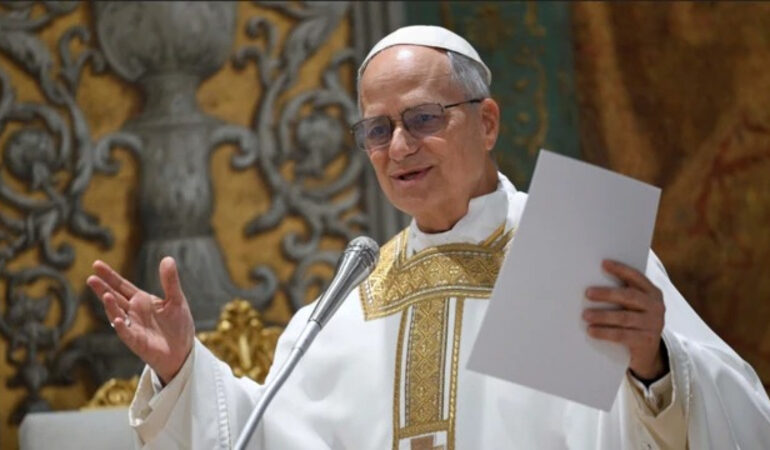

The first weeks of a new pontificate often invite intense scrutiny. Every gesture, word, and decision is examined for signs of rupture or reform. In the early days of Pope Leo XIV’s ministry, however, what stands out most clearly is not dramatic change but a deliberate sense of calm. His presence has been marked by measured language, careful symbolism, and a steady pastoral rhythm.
Rather than announcing sweeping initiatives, Pope Leo XIV has emphasized continuity and attentiveness. His early public appearances and homilies suggest a priority on listening, prayer, and presence. This approach reflects an understanding that the Church, after years of global uncertainty and internal strain, may first need stability before direction.
A Pastoral Style Rooted in Presence
From the outset, Pope Leo XIV has communicated through simplicity. His addresses have avoided rhetorical flourish and instead focused on proximity to ordinary believers. This pastoral tone is evident in his emphasis on the everyday realities of faith rather than abstract programs.
By foregrounding presence over proclamation, the Pope signals a leadership style attentive to the lived experience of the faithful. His early gestures convey a desire to accompany rather than instruct from a distance. This approach aligns with a vision of the papacy as a ministry of closeness rather than command.
Such a tone does not diminish authority. Instead, it reframes it. Authority is exercised through attentiveness and moral clarity rather than urgency or spectacle. In doing so, Pope Leo XIV establishes a foundation of trust at the beginning of his pontificate.
Continuity Without Stagnation
Continuity has been a defining feature of Pope Leo XIV’s early weeks. He has affirmed the Church’s doctrinal foundations and institutional structures without signaling abrupt shifts. This has reassured many within the Church who value stability amid global change.
At the same time, continuity does not imply immobility. His language suggests an openness to gradual development grounded in discernment rather than reaction. Rather than positioning himself as a reformer or restorer, the Pope presents himself as a steward of an ongoing tradition.
This balance allows the Church to breathe. It acknowledges the need for fidelity while leaving space for patient renewal. By resisting the pressure to define his pontificate too quickly, Pope Leo XIV allows direction to emerge organically.
Language That Invites Rather Than Divides
A notable feature of the Pope’s early communication is its inclusive tone. His homilies and public remarks consistently emphasize unity, patience, and mutual responsibility. Language is carefully chosen to avoid polarization or ideological framing.
This rhetorical restraint reflects an awareness of the Church’s global diversity. In a community spanning cultures, languages, and experiences, words carry particular weight. Pope Leo XIV appears attentive to this reality, opting for language that invites reflection rather than reaction.
Such an approach fosters dialogue. It encourages engagement without forcing immediate alignment. By prioritizing clarity over confrontation, the Pope sets a tone conducive to internal coherence and shared purpose.
Institutional Calm as a Pastoral Strategy
Beyond words, Pope Leo XIV’s early actions suggest an intentional effort to restore institutional calm. Appointments, meetings, and public engagements have been conducted without haste. This measured pace communicates confidence rather than hesitation.
Institutional calm serves a pastoral function. It reassures clergy, religious, and laity that governance is stable and attentive. In a period when many institutions face volatility, such steadiness has its own significance.
This strategy also reflects prudence. By observing before acting, the Pope allows a clearer understanding of priorities and challenges. Calm becomes a space for discernment rather than delay.
Conclusion
The first weeks of Pope Leo XIV’s pontificate point toward a leadership defined by presence, continuity, and restraint. His pastoral tone emphasizes stability and attentiveness over dramatic gesture. In choosing calm as a starting point, he signals a direction rooted in trust, patience, and shared responsibility, offering the Church space to move forward together.