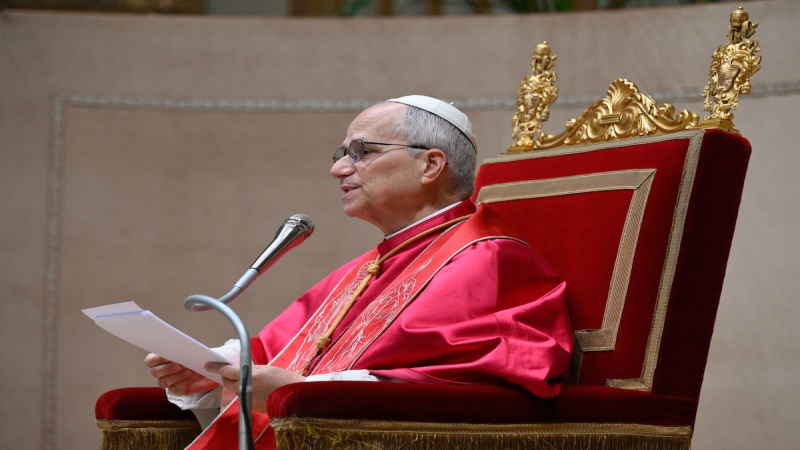


Eighty years after the forced expulsions that reshaped Central Europe at the end of the Second World War, a Czech bishop has launched a local initiative aimed at confronting unresolved historical wounds. Stanislav Přibyl announced a Year of Reconciliation for the Diocese of Litoměřice, framing it as a pastoral response to suffering that continues to mark communities long after violence has ended. The declaration follows anniversaries tied both to local religious memory and postwar Catholic reconciliation efforts, situating the initiative within a wider moral horizon rather than a political agenda. The bishop’s letter acknowledges that the end of the war brought not only relief but also acts of retribution and collective punishment that left enduring scars. By naming these realities openly, the initiative seeks to create space for reflection, prayer, and encounter in a region where silence and inherited resentment have often prevailed.
The diocese lies in northern Bohemia, an area deeply affected by the postwar expulsion of ethnic Germans from what was then Czechoslovakia. Between 1945 and 1946, millions were displaced from the Sudetenland, leaving behind empty villages, abandoned churches, and fractured social memory. While historians continue to debate responsibility and context, the bishop emphasized that the human consequences remain visible in landscapes and relationships alike. He described how anger, collective guilt, and the sudden transfer of property accompanied the expulsions, often accompanied by humiliation, violence, and loss of life. These experiences, he argued, cannot be reduced to abstract history because they continue to shape attitudes and prejudices across generations. The Year of Reconciliation is presented as an invitation to face this legacy without denial or defensiveness.
Central to the initiative are monthly gatherings in locations associated with particular cruelty or suffering, including Terezín, a site symbolizing both wartime atrocity and postwar reckoning. These events are intended to combine prayer, remembrance, and dialogue, with an explicitly ecumenical and interreligious character. Christians and Jews are invited to participate alongside Germans with ancestral ties to the region, reflecting a deliberate effort to widen the circle of memory and responsibility. The bishop stressed that reconciliation is not about rewriting history but about acknowledging sin and choosing a different future. By involving historians without turning the process into a political tribunal, the diocese aims to balance truth telling with pastoral care.
The initiative also draws inspiration from long standing reconciliation movements such as Ackermann-Gemeinde, founded by expelled Catholics who sought dialogue rather than revenge. The bishop described reconciliation as a process rather than an endpoint, warning that old wounds often resist easy closure. He argued that forgiveness requires reopening painful memories so that healing can begin, even decades later. By anchoring this effort in prayer and shared ritual, the Year of Reconciliation reflects a conviction that peace is sustained not only by treaties but by moral courage and humility. In a region where history remains contested, the initiative positions the Church as a custodian of memory seeking healing rather than vindication.