

Advent Reflection Highlights Call for Renewed Hope and Vigilant Faith
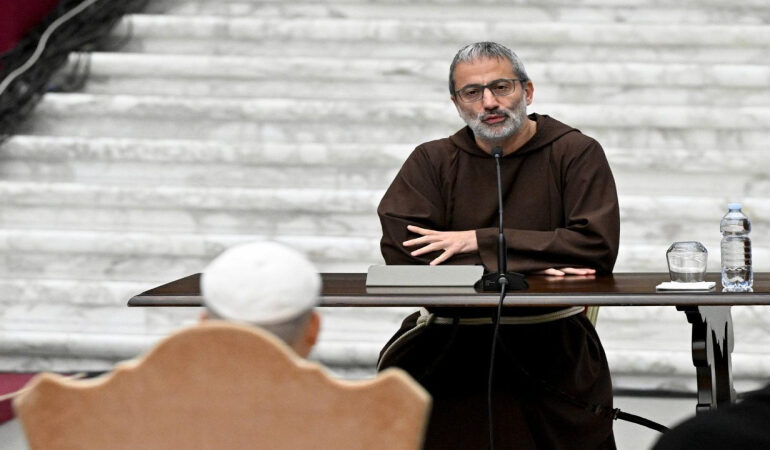

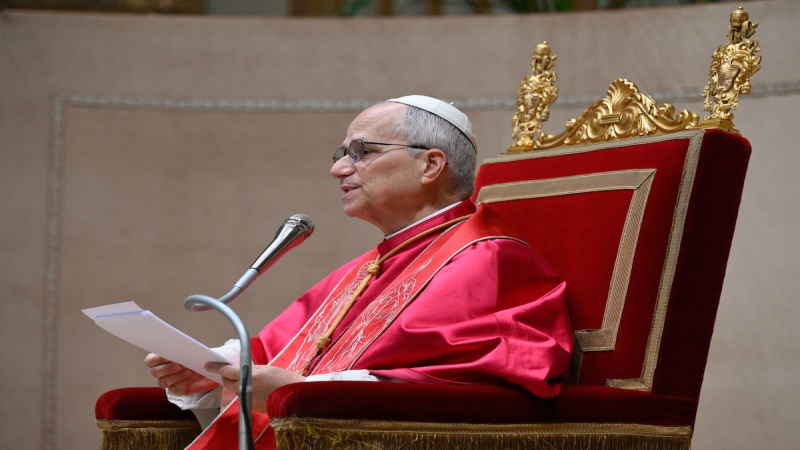
The first Advent meditation of this year invited the Church to reflect on a season marked by expectation, responsibility and an openness to transformation. Addressing the gathered community in the Paul VI Hall, Father Roberto Pasolini offered a reading of Advent that reaches beyond devotional sentiment and into a deeper awareness of the era the Church is living through. His meditation unfolded within the context of the Jubilee of Hope, a period meant to strengthen confidence in the continuing work of grace even when cultural, geopolitical and technological pressures complicate that task. By focusing on the Parousia, he drew attention to the need for believers to interpret history not as a disordered landscape but as a terrain where vigilance and trust remain essential. This dynamic of awaiting and hastening the coming of the Lord, he suggested, becomes meaningful only when believers cultivate a lucid awareness of both the challenges and the promises embedded in contemporary life.
In developing his reflection, Father Pasolini underscored how the scriptural use of the term Parousia can shape a more attentive spirituality. By recalling the days of Noah, he highlighted the contrast between ordinary routines and the quiet labor of preparing for a moment that would reshape history. This narrative, he explained, continues to speak to a Church situated in a time marked by shifting social expectations and the weakening of religious consciousness in several regions. He noted how global conflicts persist without relief for the vulnerable and how the fascination with efficiency, wealth and technology can erode the sense of transcendence needed to sustain moral clarity. The rapid expansion of artificial intelligence, he argued, reinforces a cultural temptation to imagine human life without limits, leaving little room for humility or spiritual dependence. Advent, therefore, becomes an invitation to resist these tendencies by recovering a sense of grounded discernment.
The meditation returned repeatedly to the theme of recognition, urging the Church to understand the movement of grace within history while guarding against a familiarity that dulls its meaning. Father Pasolini described how the biblical flood offers insight into the mystery of divine patience, showing that renewal often requires a moment of interruption so that life may be restored to its integrity. This interruption, he said, is not an act of destruction but a form of re-creation that makes space for goodness to flourish. He connected this image to the daily decisions individuals make when choosing not to harm others, noting that genuine covenant grows only through restraint and openness. He also warned against the temptation to reduce the Gospel to outward appearance or cultural convenience, insisting that authentic expectation demands perseverance even when discouragement settles over communities. Advent, he concluded, is a time to return to the strenuous joy of following Christ with clarity, allowing the world to be met with hope rather than resignation.
Bishop Li’s background provides insight into why he was considered a steady choice for a region that requires consistency in pastoral oversight and disciplined formation work. Raised in a Catholic family in Henan and ordained in 1999, he has spent nearly his entire ministry within the same prefecture, taking on responsibilities that range from parish leadership to the formation of seminarians and religious communities. His years directing formation programs and later serving as parish priest in Jiaozuo positioned him as a figure with both spiritual and administrative grounding, traits that often weigh heavily when selecting clergy for diocesan governance in areas where external pressures and internal pastoral demands coexist. His longevity in localized service also suggests that the Holy See views deeply rooted pastoral presence as a stabilizing factor when evaluating appointments under the specific conditions present in mainland China.
The timing of the consecration carries broader significance for observers who track developments in Vatican China relations, since each episcopal appointment functions as a mild indicator of the agreement’s durability and the extent to which both sides maintain their commitment to negotiated processes. Although the arrangement remains provisional and periodically questioned by international analysts, this latest appointment signifies that both parties continue to engage in practical cooperation where ecclesial governance aligns with local regulatory expectations. For Vatican analysts, the smooth execution of this ordination will likely be read as a sign of incremental progress in an environment where consensus is seldom rapid. For Catholic communities in Henan, however, the event holds a more immediate pastoral meaning, offering clarity and renewed leadership at a time when local structures benefit from a clearly mandated shepherd.