
Auschwitz Anniversary Calls Memory to Become a Moral Light
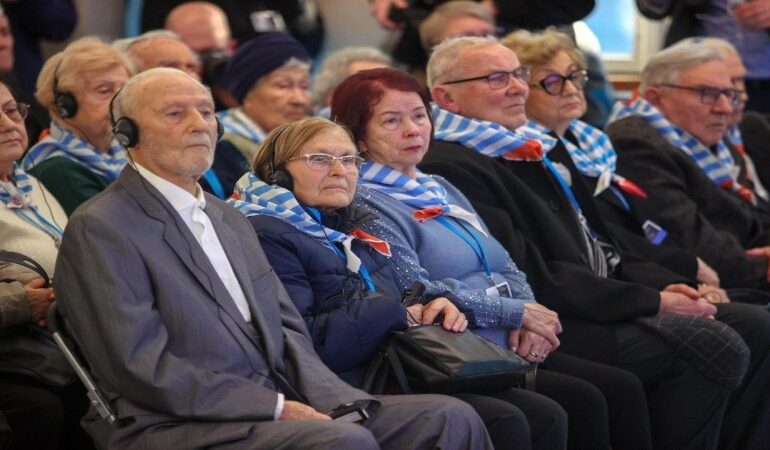

Commemorations marking 81 years since the liberation of Auschwitz-Birkenau unfolded in Poland with a strong appeal for remembrance that goes beyond ceremony and ritual. Speakers at the former German Nazi concentration and extermination camp stressed that memory must remain a living moral responsibility, especially amid rising global instability and renewed expressions of hatred. Holocaust survivor Bernard Offen urged those gathered not to allow remembrance to become a passive burden, but rather a guiding force capable of illuminating moments of darkness. His appeal resonated throughout the day as survivors, officials, and representatives of international institutions reflected on the enduring meaning of Auschwitz as a warning against dehumanization and indifference. The anniversary highlighted the urgency of preserving memory at a time when the generation of eyewitnesses is steadily passing.
The observances began in the morning at Auschwitz I, where former prisoners laid wreaths and candles at the Death Wall, opening a full day of remembrance across the memorial site. The main ceremony later took place in a former intake building, bringing together survivors, members of the diplomatic corps, and state leaders. Bernard Offen, born in Kraków in 1929, shared personal memories of loss, separation, and survival. He recalled the murder of his mother and sister and the moment he was torn from his father upon arrival at Auschwitz. Offen credited his survival to the help of others, whom he described as his angels, and spoke of returning to Poland decades later as a place where he regained a sense of safety. He urged future generations to carry memory forward as a source of ethical clarity.
Auschwitz Museum Director Piotr Cywiński reflected on the relationship between memory and lived experience, describing both as essential resources for societies facing uncertainty and conflict. He warned against treating remembrance as a formal obligation or historical exercise, insisting instead that it should foster awareness and responsibility. Cywiński noted that as international norms are increasingly challenged, the testimonies of survivors become a foundation for understanding the consequences of moral collapse. Polish officials echoed these concerns, emphasizing that the Holocaust was the result of deliberate state policies supported by widespread social acceptance, preceded by years of indifference and violence. Speakers stressed that acknowledging responsibility is essential to preventing distortion and denial.
Other participants addressed the transition from living memory to historical memory, highlighting the importance of preserving testimonies through education and digital archives. With fewer survivors able to speak firsthand, maintaining access to authentic accounts was presented as a safeguard against forgetting and antisemitism. The anniversary recalled that when Auschwitz was liberated on January 27, 1945, around 7,000 prisoners remained alive, while approximately 1.1 million people had already been murdered there, most of them Jews. Today, Auschwitz stands as a global symbol of the Holocaust and a reminder that remembrance must inspire vigilance, moral courage, and a commitment to human dignity in every generation.