

Bangladeshi Bishop Criticizes Hasina Verdict as Politically Driven
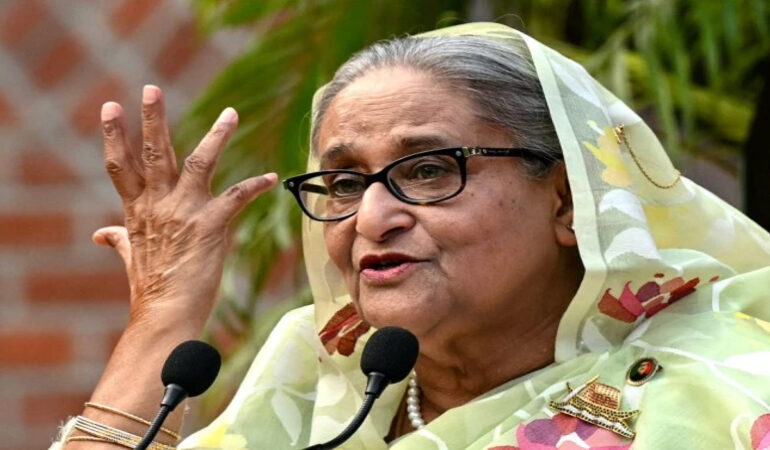

A senior Bangladeshi bishop has raised concerns over the recent death sentence issued against former Prime Minister Sheikh Hasina, describing the ruling as a misuse of political authority and inconsistent with the country’s long-term commitment to judicial integrity. Bishop Ponen Paul Kubi of Mymensingh stated that the verdict delivered by the International Crimes Tribunal lacked basic procedural safeguards, noting that the accused had no legal representation and that the process appeared to be shaped by political motivations rather than an impartial evaluation of evidence. He also reaffirmed the Catholic Church’s stance against capital punishment, emphasizing that responses to wrongdoing must be rooted in principles that promote human dignity and allow for rehabilitation rather than retribution. His comments come as Bangladesh continues to navigate the aftermath of the 2024 student uprising, a period marked by widespread unrest, allegations of excessive force and a deepening divide between political factions. The situation reflects broader tensions within the nation as it grapples with questions of governance, accountability and democratic legitimacy.
Public reaction to the tribunal’s announcement has revealed sharp divisions within Bangladeshi society. Celebratory gatherings were reported in parts of Dhaka shortly after the decision, while the banned Awami League organized protest marches condemning the ruling as retaliation against a former leader. Analysts note that the 453-page verdict found Hasina guilty on multiple counts related to the government’s response to last year’s demonstrations, including the use of military-grade equipment against protesters. The tribunal also issued a death sentence in absentia against former home minister Asaduzzaman Khan Kamal and sentenced the former police chief to prison after he agreed to cooperate with investigators. While supporters of the ruling view it as an important step toward justice for victims, critics argue that political instability has made it difficult to ensure due process and that the current interim government lacks the broad mandate required to oversee such consequential decisions. These contrasting perspectives highlight how deeply the events of 2024 continue to influence public sentiment and political discourse.
International observers and regional experts have cautioned that the broader implications of the verdict may extend well beyond legal considerations. With national elections expected in February, the sentencing has introduced additional uncertainty at a moment when Bangladesh is attempting to stabilize its institutions and rebuild public trust. The interim government has formally requested India’s cooperation in extraditing Hasina, who has been living in exile since fleeing the country following the protests. The request signals how geopolitical relationships may become intertwined with domestic legal proceedings, potentially affecting regional diplomacy and internal cohesion. Bishop Kubi’s remarks underscore the moral complexities involved in administering justice during times of national strain. He emphasized that punishment must always reflect the principles of fairness and humanity, urging leaders to consider the long-term consequences of decisions made in moments of heightened political tension. His appeal adds an important moral dimension to a rapidly evolving situation that continues to shape Bangladesh’s social and political landscape.