


Baptism Site in Jordan Anchors Faith and History
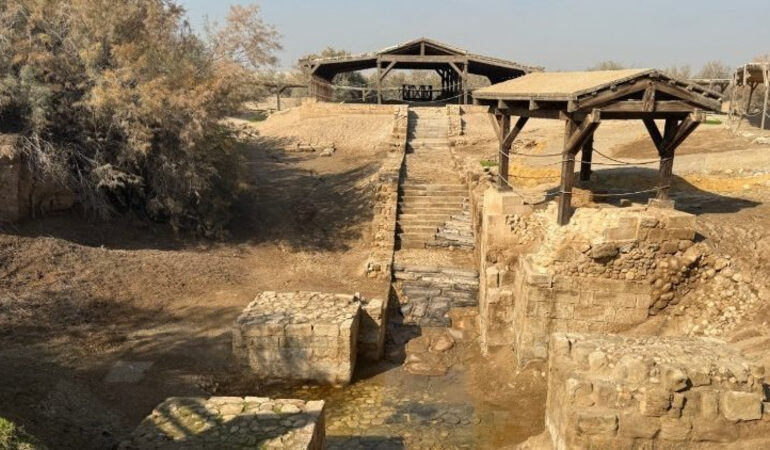

As the Church marks the Feast of the Baptism of the Lord, attention turns to Bethany Beyond the Jordan, the site traditionally recognized as the place where Jesus was baptized by John the Baptist. Known today as Al-Maghtas, the location lies on the eastern bank of the Jordan River in modern day Jordan and has long held spiritual importance for Christians across traditions. Gospel accounts place Jesus’ baptism beyond the Jordan, a reference preserved in early Christian memory and reinforced by centuries of pilgrimage. Far from being symbolic alone, the site reflects a continuity of worship that has survived persecution, political change, and natural destruction. Al-Maghtas stands as a convergence point of scripture, tradition, and archaeology, grounding a central Christian mystery within a clearly identifiable geographic and historical landscape.
Historical sources from the early centuries of Christianity distinguish this Bethany from the village near Jerusalem, identifying it instead with a place once called Bethabara. Church Fathers such as Origen and John Chrysostom referred to this eastern Jordan location as the baptismal site, a tradition also preserved in ancient maps and Jewish texts. Archaeological excavations conducted over recent decades have revealed the remains of churches, chapels, hermits’ dwellings, mosaics, and a large cross shaped baptistery clustered around the river. These discoveries point to an organized and enduring pattern of worship beginning in late antiquity. Structures built during the Byzantine era testify to the importance attributed to the site, even as floods and earthquakes repeatedly damaged early churches, requiring rebuilding or abandonment over time.
Among the most significant remains are those of a church dedicated to John the Baptist, first constructed during the reign of Byzantine Emperor Anastasius I. Pilgrim accounts from the sixth century describe a prominent church elevated above floodwaters, alongside visible markers of devotion. Nearby, the Basilica of the Holy Trinity once stood as a reminder of the theological meaning of the baptism event, when Father, Son, and Holy Spirit were revealed together. Excavations also extend beyond the riverbank to Tell al-Kharrar, traditionally associated with the prophet Elijah, where monastic life flourished during the Byzantine period. These interconnected sites reflect how biblical memory shaped settlement, prayer, and pilgrimage patterns across centuries.
In recognition of its universal religious value, Bethany Beyond the Jordan was inscribed on the UNESCO World Heritage List in 2015. The designation acknowledges its importance to Christian history and its role as a destination for monks, pilgrims, and clergy from the fourth century onward. The site has also drawn the attention of modern popes. John Paul II visited during the Jubilee Year 2000, followed by Benedict XVI in 2009, and Francis in 2014, when he met refugees and vulnerable communities sheltering in Jordan. In January 2025, a new Church of the Baptism of the Lord was consecrated, further anchoring Al-Maghtas as a living center of Christian worship and memory.