


Bishop Erik Varden Reflects on St Bernard During Vatican Lenten Retreat
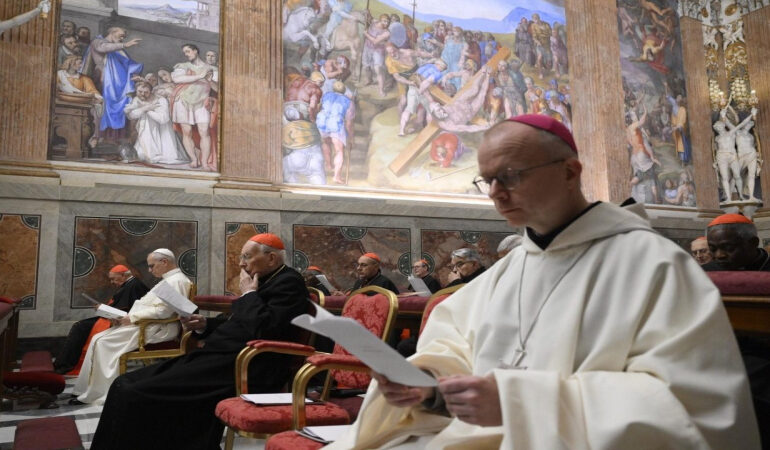

Bishop Erik Varden of Trondheim offered a meditation on St Bernard of Clairvaux during the annual Lenten Spiritual Exercises held in the Vatican for Pope Leo XIV, Cardinals residing in Rome, and heads of Dicasteries of the Roman Curia. In his second reflection, Bishop Varden presented Bernard as an idealist shaped by conviction, struggle, and deep love for God.
St Bernard remains one of the towering figures of the twelfth century and a defining presence within the Cistercian movement. Although often credited with founding the order, he entered the monastery of Cîteaux in 1113 at the age of 23, bringing with him around thirty companions. The community itself had been established in 1098 as a novum monasterium, a new monastery that sought renewal through fidelity to the Rule of St Benedict while embracing creative initiative.
Bishop Varden noted that the early Cistercians were not driven by reaction against existing institutions but by a desire to live the Gospel more fully. This combination of tradition and innovation created a fruitful dynamic. While outwardly conservative in their emphasis on simplicity and discipline, they introduced new forms of organization and spiritual expression that allowed the movement to flourish.
In examining Bernard’s personality, Bishop Varden described a man of intense conviction and strong judgment. Bernard’s confidence sometimes led him to take firm and even partisan positions in the Church’s debates. Yet this firmness did not stem from hypocrisy. Rather, it was rooted in a genuine commitment to what he believed served the needs of the Church.
At the same time, Bernard was marked by humility and tenderness. He was capable of deep friendship and reconciliation, even with former opponents. His life revealed a balance between zeal and compassion, a tension that shaped both his leadership and his spiritual teaching.
Bishop Varden drew a brief comparison to the twentieth century Trappist monk Thomas Merton, recalling how Merton’s intellectual intensity once exasperated his abbot, Dom James Fox. Though separated by centuries, Bernard and Merton shared a quick and searching temperament. Both displayed a restless energy directed toward the pursuit of truth and authenticity in the monastic vocation.
Central to Bernard’s legacy is his teaching on conversion. Grounded in Scripture and theological reflection, his writings increasingly reflected personal experience and inner struggle. Over time, Bernard came to recognize the need to confront his own self righteousness and to rely more fully on divine mercy. His journey illustrated that conversion is not a single moment but a continual turning toward God.
As the Church enters the Lenten season, Bishop Varden proposed Bernard as a guide for those seeking renewal. The saint’s example of perseverance, self examination and trust in God’s illuminating love offers a model for believers striving to move beyond pride and selfishness toward deeper communion with Christ.