
Cameroonian Catholics Show Little Enthusiasm as President Biya Begins His 8th Term
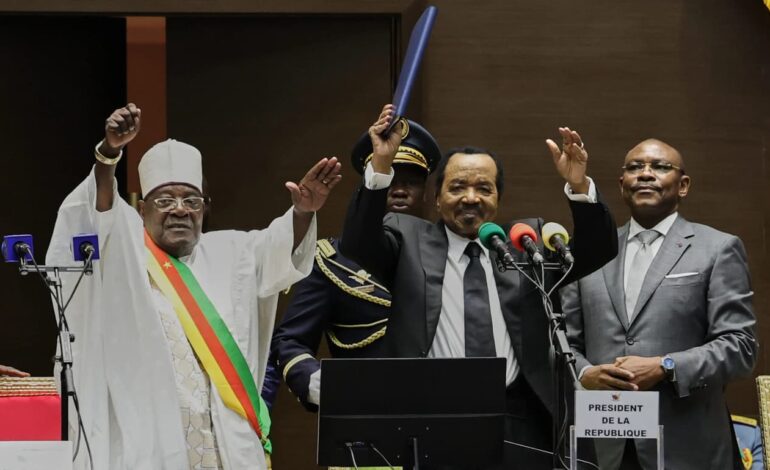

President Paul Biya has officially begun his eighth term in office, extending his decades-long leadership of Cameroon in a ceremony marked by political tension and muted public response. The 92-year-old leader, who has ruled since 1982, was sworn in on November 6 at the National Assembly after being declared the winner of the October 12 presidential election with 53 percent of the vote.
Biya’s inauguration speech was a mix of gratitude and appeals for national unity. He thanked Cameroonians for renewing their trust in him and promised to continue leading with determination despite the country’s ongoing challenges. “I will spare no effort to continue to be worthy of this trust, whatever the circumstances and obstacles,” he said, adding that Cameroon must remain united in the face of growing political division.
“This country is our shared heritage, our most precious asset. Rather than destroying it, we must build, strengthen and modernize it,” Biya told lawmakers and dignitaries gathered for the ceremony. He warned that the nation could not afford a post-election crisis similar to those that have destabilized other African countries.
Biya’s comments came as his former government spokesperson and main rival, Issa Tchiroma Bakary, continued to reject the election results. Tchiroma, who left Biya’s administration to run against him, has claimed that he is the rightful winner and that the outcome was manipulated by the Constitutional Council.
In a video message posted on Facebook, Tchiroma accused the authorities of stealing the election, declaring that Cameroon now has “two presidents, one elected by the people and another appointed by the Constitutional Council.” He vowed to “restore the stolen victory” and said he was working on his own plan to address the nation.
Reports from opposition circles suggest that Tchiroma, who fled to Nigeria after receiving threats against his life, has since left that country for an undisclosed location. One of his close associates, journalist Eric Chinje, said the opposition leader was preparing to announce his own governance program and present it to the nation at an appropriate time.
Despite Biya’s call for unity, reactions to his re-election have been mixed, especially among Catholic and civil society groups. Church leaders and community members expressed disappointment that the election failed to bring meaningful change to a country facing economic hardship, corruption, and regional unrest. Many citizens, particularly in the Anglophone regions, continue to feel marginalized and skeptical about the government’s promises of reform.
Observers note that Biya’s continued rule has created both stability and stagnation. While his administration maintains a strong hold on power, critics argue that his lengthy tenure has eroded democratic institutions and limited political competition. The latest election, they say, reflects deep divisions within Cameroon’s political landscape.
As the country looks ahead, calls for dialogue and reconciliation are growing louder. Church leaders and civic organizations are urging both the government and opposition to avoid confrontation and work toward national healing. For now, however, the mood among many Cameroonians remains subdued, with little optimism that Biya’s new term will bring the change many have long hoped for.