

Cardinal Hollerich Says Peace Begins With Personal Conversion
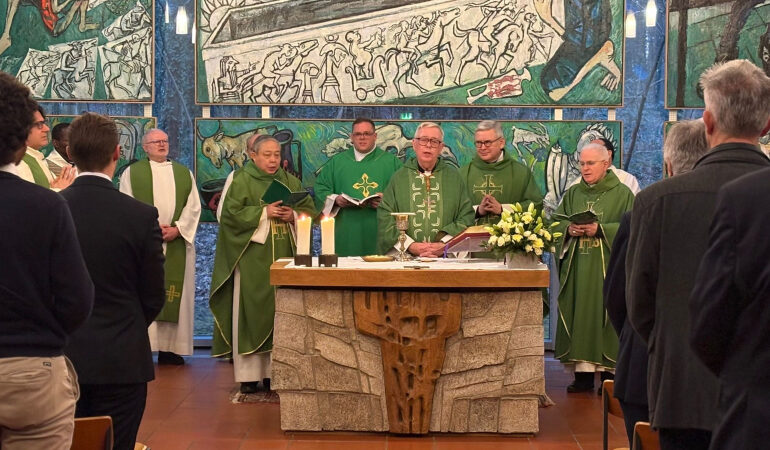

Lasting peace in Europe and beyond cannot be achieved through political agreements alone but requires a profound moral and spiritual renewal, according to Jean-Claude Hollerich. Speaking during a conference in Luxembourg focused on peacebuilding and Catholic social thought, the cardinal reflected on the ongoing war in Ukraine and the broader political crises affecting the continent. He said that while diplomacy and humanitarian action remain essential, peace does not emerge automatically from negotiations or institutional frameworks. Instead, he emphasized that individuals must commit themselves personally to becoming instruments of peace within their own communities. Without such interior transformation, he warned, even well intentioned political initiatives risk remaining ineffective or short lived, as they lack the moral foundation necessary to sustain reconciliation and social healing.
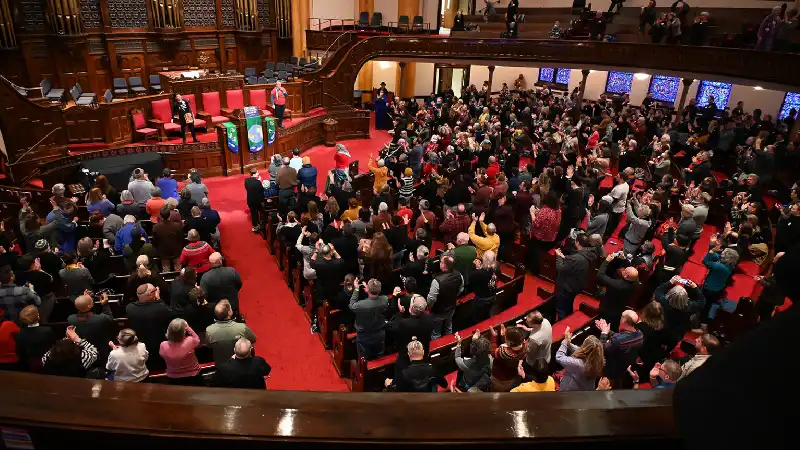
The conference brought together Church leaders, European policymakers and academics to explore how principles such as human dignity, solidarity and the common good can shape responses to war, displacement and political fragmentation. Participants highlighted the urgency created by the conflict in Ukraine, noting the ongoing suffering of civilians and the strain placed on European unity. Discussions underscored that peacebuilding must involve both ethical clarity and practical action, particularly in defending vulnerable populations. Several speakers cautioned against approaches that prioritize expedient settlements over justice, arguing that peace cannot be built at the expense of human dignity. Within this context, Cardinal Hollerich reiterated that personal responsibility and moral coherence are indispensable elements of any credible peace effort, calling on individuals and institutions alike to embody the values they seek to promote.
A message sent to the conference by Leo XIV echoed these themes, stressing that peace depends on shared moral foundations. The Pope noted that societies cannot flourish without commonly held truths that shape their values and norms, and he pointed to Catholic social teaching as a resource capable of fostering dialogue and coexistence beyond national and ideological boundaries. European leaders participating in the event also reflected on the continent’s historical experience, recalling that postwar integration was rooted in reconciliation rather than retaliation. They warned that technocratic or purely strategic solutions, detached from ethical considerations, risk weakening Europe’s ability to respond effectively to conflict and instability in an increasingly fragmented global landscape.
Cardinal Hollerich concluded by linking the Church’s social engagement directly to spiritual renewal, insisting that peace must be lived before it can be proclaimed. He said that becoming men and women of peace in daily life is a demanding but necessary path if broader political and diplomatic efforts are to bear fruit. This emphasis aligns with Pope Leo XIV’s repeated calls for conversion of heart as the foundation of peace, particularly in a time marked by war, polarization and uncertainty. The conference closed with a renewed appeal for unity, solidarity and moral responsibility, highlighting the Church’s role in reminding Europe that peace is not only a political objective but a shared vocation grounded in conscience and commitment.