Cardinal Pizzaballa Warns Against Using God’s Name to Justify War Amid Middle East Crisis

Cardinal Pierbattista Pizzaballa has issued a strong warning against invoking religion to justify ongoing conflict in the Middle East, describing such actions as a grave distortion of faith. Speaking during a webinar as violence continues across the region, the Latin Patriarch of Jerusalem emphasized that war is driven by political and material interests rather than genuine religious purpose. He stressed that presenting conflict in religious terms risks deepening divisions and misleading communities. According to the cardinal, the misuse of God’s name not only distorts truth but also undermines the moral foundation that faith traditions seek to uphold.
Addressing recent developments, the cardinal referred to statements by political figures that framed military actions with religious language, including references to scripture in support of warfare. He firmly rejected such interpretations, stating that faith should never be used to legitimize violence. Instead, he underscored that God’s presence in times of conflict is found among those who suffer, not among those who wage war. His remarks reflect growing concern within religious leadership that spiritual language is being manipulated in ways that intensify conflict rather than promote understanding and restraint.
The cardinal also highlighted the broader responsibility of religious communities to speak clearly and truthfully in moments of crisis. He acknowledged that calls for peace and dialogue, including those recently made by Pope Leo XIV, may not always be immediately heard or accepted. However, he insisted that the Church must continue to articulate a vision rooted in justice and reconciliation. He warned that violence inevitably creates cycles of fear, resentment, and instability, leaving long lasting damage that extends beyond the immediate battlefield and affects entire societies.
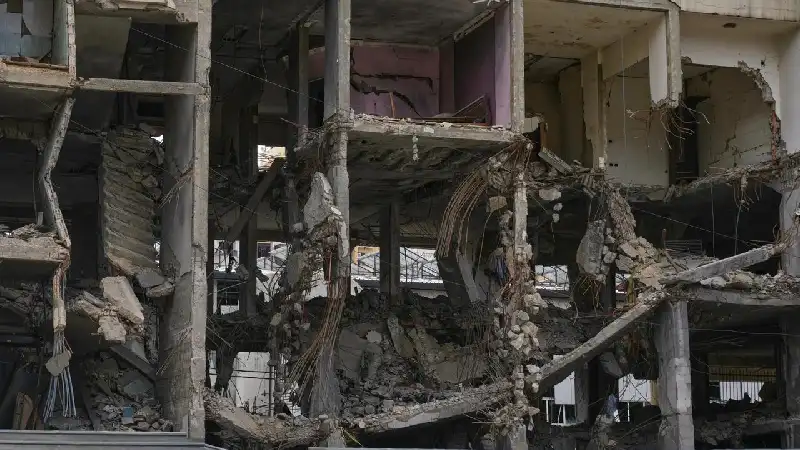
Attention was also drawn to the humanitarian situation in Gaza and the West Bank, which the cardinal described as increasingly severe and often overlooked. He noted that millions of people remain displaced, living in conditions marked by destruction and lack of basic services. Infrastructure remains heavily damaged, with limited access to medical care and essential supplies. In the West Bank, he pointed to growing restrictions on movement and rising tensions in local communities. These conditions, he said, reflect a crisis that continues to deepen without clear resolution or sustained international focus.
In addition to the physical impact of the conflict, the cardinal raised concerns about the role of information and media in shaping public perception. He noted that communication has become part of the conflict itself, influencing how events are understood and justified. Journalists, he said, carry a responsibility to present information accurately and to help audiences develop a critical understanding of complex realities. Without careful reporting, there is a risk that narratives may reinforce division or normalize violence rather than encourage informed reflection.
The situation on the ground, according to the cardinal, remains locked in a cycle where political and military conditions prevent progress toward resolution. He described a stalemate in which opposing sides remain unwilling to take steps that could lead to de escalation. This dynamic has contributed to prolonged suffering for civilians and uncertainty about the future. The absence of effective mechanisms for peace has further complicated efforts to rebuild trust and stability across the region.
The cardinal also expressed concern about the long term consequences of recent policy decisions affecting communities, including measures that could impact education and economic stability. He warned that such developments may place additional strain on already vulnerable populations and weaken social structures, including those supporting minority communities. His remarks reflect a broader call for renewed attention to both immediate humanitarian needs and the deeper structural issues that continue to shape the conflict.