Catholic Church Expands Humanitarian Role in Cuba as Public Criticism of Government Grows

As Cuba faces one of its most severe social and economic crises in decades, the Catholic Church has emerged as a central provider of humanitarian assistance, distributing international aid while an increasing number of Catholics speak openly about the country’s political and economic direction.
The current emergency intensified after Hurricane Melissa struck eastern Cuba in October 2025, leaving widespread destruction in provinces such as Camagüey and Santiago de Cuba. Millions were affected, with thousands of homes damaged or destroyed. Many families remain in temporary shelters months later.
Compounding the humanitarian strain, fuel shortages have deepened following reduced oil shipments to the island. Power outages have become more frequent, public services have been disrupted, and garbage collection has slowed in major cities due to lack of fuel. Food prices have surged and tourism has declined, leading to job losses across the country.
In this context, Caritas Cuba has played a pivotal role in organizing and distributing aid. The Archdiocese of Santiago de Cuba has functioned as a major logistical hub, receiving shipments of food and hygiene kits from abroad. Clergy report that Church facilities, including parishes and shrines, have been used to store and distribute essential supplies to vulnerable communities.
Church leaders describe an evolving relationship with state authorities. While Cuba remains a communist governed nation with strict controls, Catholic representatives say there has been gradual recognition of the Church’s humanitarian contribution. Caritas has been permitted to conduct needs assessments and distribute relief through diocesan networks, an operational space that observers consider notable in the Cuban context.
Beyond institutional coordination, religious orders and parish communities have mobilized volunteers to collect donations and assist families affected by the hurricane and ongoing shortages. The Church’s longstanding presence in local neighborhoods has positioned it as a trusted channel for solidarity during the crisis.
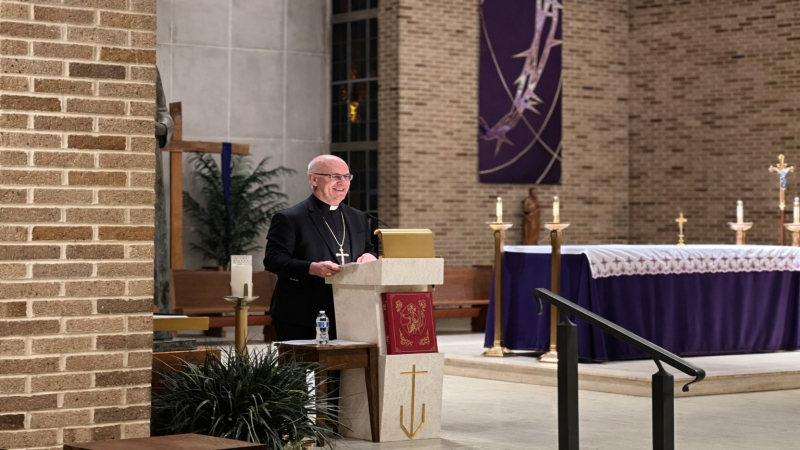
At the same time, several Catholic voices have become more explicit in criticizing national conditions. Archbishop Dionisio García Ibáñez of Santiago de Cuba has publicly lamented widespread shortages of food and medicine, as well as deteriorating living standards. Other clergy have framed their remarks as moral appeals for accountability, dignity, and reform.
Some Catholic commentators have gone further, questioning government policies and calling for structural change. These statements reflect a broader atmosphere in which ordinary citizens face prolonged hardship and uncertainty.
As Cuba navigates economic decline, energy shortages, and social strain, the Catholic Church continues to balance humanitarian service with pastoral care. Its expanding role in relief efforts has increased its public visibility at a moment when questions about governance, social stability, and the future of the island are increasingly part of national conversation.