
Catholic Delegates Press for Stronger Climate Finance Commitments at COP30
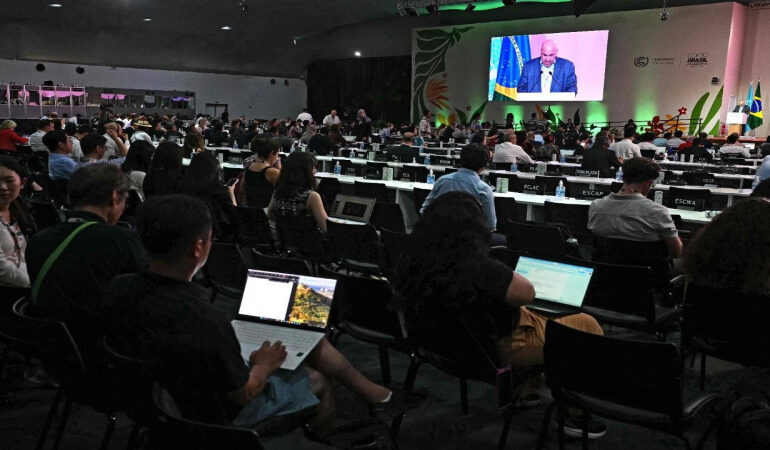

Catholic organizations participating in COP30 are pushing global negotiators to address climate impacts with approaches grounded in justice, responsibility and long term financial commitment. Speaking from Belém, representatives from CAFOD and other Catholic networks emphasized that the climate crisis continues to disproportionately affect communities already living with high levels of vulnerability. Their work at the summit focuses on ensuring that global discussions integrate the concerns of those facing rising temperatures, shifting weather patterns and increasing ecological instability. The delegation highlighted that Catholic leaders, including cardinals and bishops, are using negotiation spaces to amplify the moral urgency of climate action, connecting their advocacy to the tenth anniversary of Laudato si’, which continues to shape the Church’s ecological vision. CAFOD’s advocacy director pointed to the importance of a coordinated presence, noting that the Holy See’s involvement as a state party allows Catholic actors to strengthen arguments for climate finance that prioritizes the common good. This approach aligns with the broader ethical framework of Catholic social teaching, which views environmental degradation and social inequality as intertwined challenges requiring collective responsibility.
The delegation also underscored that communities across Africa, Asia and Latin America are facing increasingly severe consequences linked to rising global temperatures. Their partners report unpredictable rainfall, crop losses, flood destruction and weather patterns that are eroding traditional agricultural practices. Local adaptations such as floating gardens in Bangladesh illustrate how community resilience is being strengthened through innovative techniques, yet these solutions require consistent support and investment to be sustainable. Catholic organizations argue that bringing firsthand accounts of these experiences into COP30 discussions ensures that global strategies reflect the realities of those most affected. They noted that the early phase of negotiations is often slow, as technical officials debate policy structures within national constraints, but the second week of the summit typically brings greater flexibility once ministers arrive. This shift is crucial since the current summit is heavily focused on implementation and financing, areas where progress has historically been uneven. Delegates emphasized that meaningful compromise will be essential if the summit is to deliver commitments capable of addressing both immediate recovery needs and long term climate resilience.
Financial questions remain central to the negotiations, with Catholic representatives stressing that climate finance must be approached as a matter of justice rather than charity. They pointed out that communities experiencing the harshest impacts have contributed least to the rise in global emissions and should not be left pleading for support. Proposals such as debt relief, financial system reform and the expansion of public funding are being promoted to create more equitable pathways for vulnerable nations. CAFOD highlighted that debt cancellation can rapidly unlock funds without burdening taxpayers, allowing countries to implement national climate plans and respond to disasters more effectively. Delegates also criticized the contrast between the ease with which governments allocate funds to military budgets and the difficulty of meeting climate finance commitments, framing this disparity as a question of political choices rather than financial limitations. Despite the slow pace of negotiations, Catholic organizations insist that the UNFCCC process remains essential because it brings diverse actors into a common space where solutions can be shaped collaboratively. They warned that abandoning multilateral dialogue would create openings for interests opposed to coordinated climate action and would delay progress at a moment when urgency is mounting. Their presence at COP30 aims to reinforce the moral responsibility of nations to act decisively, pairing technical proposals with a call for ethical leadership grounded in human dignity.