


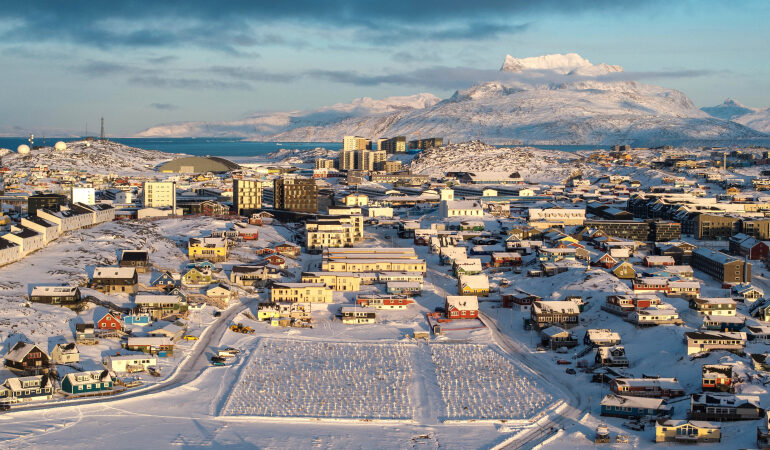

Renewed rhetoric from Washington about acquiring Greenland has prompted fresh debate about the moral limits of power in international affairs, with Catholic social teaching entering the conversation. A security expert from a major Catholic university has cautioned that any attempt by the United States to take control of Greenland would represent a serious overreach, both strategically and ethically. Speaking in the context of recent Vatican statements condemning diplomacy driven by force, the scholar argued that such ambitions risk undermining respect for the self determination of peoples and the international order. Greenland’s population has repeatedly expressed a desire for autonomy rather than annexation, a reality that must be taken seriously. From a Catholic ethical perspective, the pursuit of security cannot come at the expense of justice or human dignity. The debate reflects wider concerns about how powerful states interpret their interests in an increasingly unstable global landscape.
The expert noted that while global tensions are undeniably high, Greenland does not represent a flashpoint likely to trigger large scale conflict. More pressing threats to peace, he suggested, lie in ongoing wars and unresolved disputes elsewhere, rather than in the Arctic. He questioned why longstanding cooperative arrangements with Denmark and Greenland would suddenly be framed as insufficient. Historically, the United States has maintained military access and strategic presence in Greenland without asserting sovereignty. Shifting toward control or annexation, he argued, would disrupt alliances and introduce unnecessary instability. From this perspective, aggressive rhetoric risks weakening trust among partners at a time when cooperation is essential. Catholic social teaching emphasizes prudence and restraint in the exercise of power, principles that appear increasingly relevant as geopolitical competition intensifies.
Reflecting on the broader implications for society, the scholar pointed to a growing sense of unease among younger generations. While international crises form part of the background of modern life, many young people are more immediately concerned with economic insecurity, social change, and uncertainty about the future. Decades of near constant conflict have normalized war in public discourse, dulling sensitivity to its consequences. Within this context, Catholic voices have continued to stress solidarity and the pursuit of peace, even as the gap widens between moral aspirations and political realities. The challenge, he said, lies in translating ethical principles into policies that acknowledge complexity without surrendering core values. Failure to do so risks cynicism and disengagement, particularly among those already skeptical of institutions and leadership.
Despite these concerns, the scholar expressed cautious hope rooted in the Catholic intellectual tradition. Drawing on longstanding theological reflections, he emphasized that while a perfectly just world may be unattainable, societies remain obligated to act justly within imperfect conditions. Catholic social teaching offers a framework for balancing realism with moral responsibility, urging leaders to resist the temptation of domination in favor of cooperation. He also pointed to the energy and commitment of many young people who, despite pessimism, are prepared to engage constructively with global challenges. Their willingness to think critically and act ethically suggests that the future need not be defined solely by power struggles. In this light, debates over Greenland serve as a reminder that moral boundaries still matter in shaping a credible and humane international order.