
Catholics with Disabilities Share How Faith Shapes Belonging Ahead of Global Awareness Day
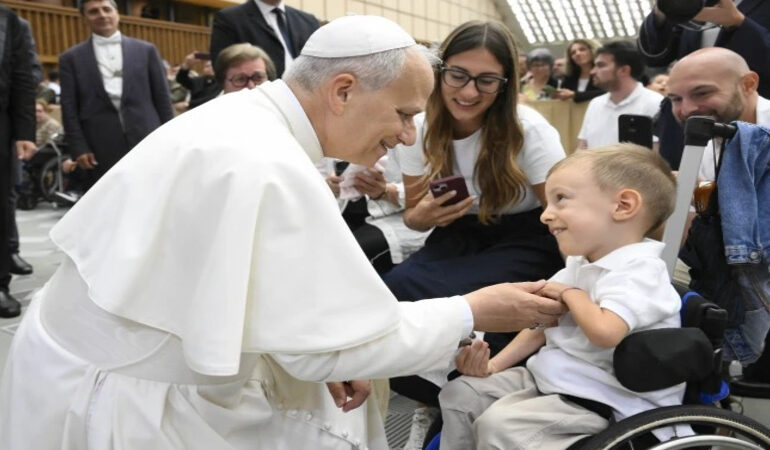

As the International Day of Persons with Disabilities is observed worldwide, a recent panel of Catholic adults with disabilities offered a deeper look into how faith sustains them and how parishes can build more inclusive communities. The discussion, hosted by the National Catholic Partnership on Disability, reflected long standing challenges faced by Catholics with disabilities but also highlighted the ways in which spiritual identity supports resilience. Speakers described how liturgical participation, catechesis and pastoral engagement can become anchors of purpose, especially when individuals are given space to contribute meaningfully. Their reflections come at a moment when many dioceses are examining how to strengthen accessibility, not only in terms of physical spaces but in the culture of welcome that surrounds parish life. The panelists emphasized that full participation in the life of the Church is a matter of dignity rooted in baptism, a principle that carries significant theological weight as the global Church continues to reflect on the meaning of community.
One participant, pursuing graduate studies in pastoral ministry, spoke openly about navigating exclusion within her parish before discovering renewed purpose through disability ministry. She explained how earlier restrictions placed on her because she sometimes uses a wheelchair led her to advocate for herself and to educate parish leaders with the help of national resources. Eventually, the decision was reversed, allowing her to resume lecturing at Mass, which she described as an experience that strengthened both her confidence and her sense of mission. Her story illustrated the tension between pastoral caution and the need for ecclesial structures that recognize individual capability rather than making assumptions about limitations. Another panelist described how joining a parish community with an established support group for adults with disabilities transformed her understanding of belonging. Through a buddy system offering personal accompaniment, she said she found encouragement, support and the assurance that no one should be left alone in their faith journey. Their accounts underscored that inclusion begins with intentionality and continues through consistent accompaniment.
The panel also urged Catholics without disabilities to become proactive allies by cultivating awareness, engaging with parishioners directly and ensuring that ministries are designed with accessibility in mind. Speakers stressed that assumptions about the needs of disabled adults can unintentionally create barriers, making personal dialogue essential for understanding how best to support individuals. They encouraged those struggling to find a place in their parish to seek out broader community resources and not to limit themselves to a single church environment, noting that the diversity of parish life across dioceses offers different opportunities for integration. The emphasis on the Church as a mystical body highlighted the theological foundation for inclusion, affirming that community life is incomplete when any member feels isolated. As global observances draw attention to disability rights and human dignity, Catholic communities are being reminded that faith calls for a model of welcome grounded in solidarity, mutual respect and the conviction that every person contributes uniquely to the life of the Church.