
Charlotte Diocese Moves to Standardize Communion Practice
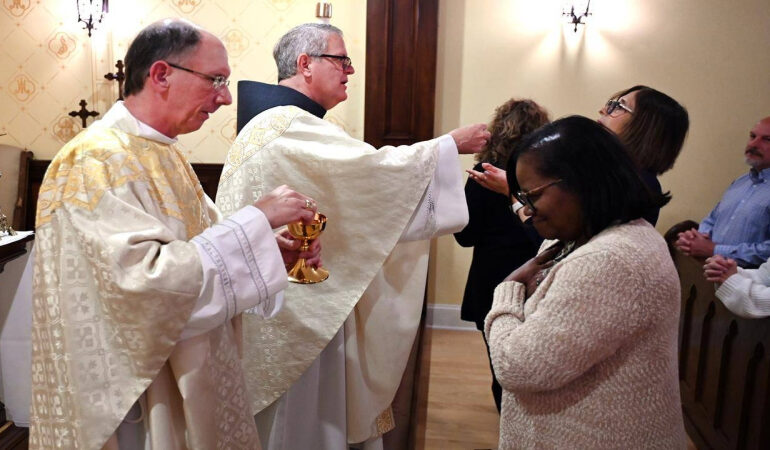

In the Diocese of Charlotte, Bishop Michael Martin has issued a pastoral letter introducing updated norms for the reception of Holy Communion, placing emphasis on unity, shared posture, and active participation in liturgical life. Michael Martin presented the guidance as a continuation of existing diocesan practice rather than a departure from tradition, framing the Eucharist as a communal act of worship shaped by common gestures. The letter affirms standing as the normative posture for receiving Communion in the United States and instructs parishes that have reintroduced altar rails or kneelers to discontinue their use. According to the bishop, uniform practice helps express the Church’s identity as a pilgrim people journeying together. The letter follows months of consultation with priests and diocesan liturgy offices, signaling an effort to align local practice with broader ecclesial norms rather than individual parish preferences.
The directive clarifies that while standing is the standard posture, no communicant may be denied Communion for choosing to kneel. At the same time, clergy and catechists are instructed not to promote kneeling or other postures as superior or more reverent. The bishop emphasized that posture serves as a visible sign of unity rather than a measure of personal devotion. In parishes where altar rails had been reintroduced in recent years, their removal is intended to reinforce the procession of the faithful as a collective action. The guidance reflects concern that visible differences in posture can unintentionally foster division or confusion, especially for parishioners who attend Mass in different communities within the diocese.
Beyond posture, the pastoral letter encourages broader distribution of Communion under both bread and wine, particularly at Sunday Masses and major feasts. While reaffirming Catholic teaching that Christ is fully present under either form, the bishop described Communion under both kinds as a fuller sign of participation in the Eucharistic mystery. The guidance notes that many parishes did not resume distribution of the Precious Blood after the pandemic, leading to inconsistent practice across the diocese. By recommending its restoration at least once each Sunday and on major solemnities, the letter seeks to foster coherence and shared expectation among the faithful. The norms also restate that reception on the tongue or in the hand remains a personal choice and explicitly prohibit intinction at public liturgies.
The pastoral letter also formalizes expectations regarding the use of extraordinary ministers of Holy Communion. While priests and deacons remain the ordinary ministers, parishes are encouraged to train and appoint sufficient lay ministers to assist where needed, including in taking Communion to the sick and homebound. Clear eligibility and formation requirements are outlined, reinforcing the seriousness of the role. The bishop framed these measures as pastoral rather than administrative, intended to ensure reverent and orderly celebration of the Eucharist across the diocese. Taken together, the norms reflect a broader effort to balance tradition, participation, and unity at a time when liturgical practice has become an increasingly visible point of debate within the Church.