

Chile Elects Conservative President After Landslide Vote
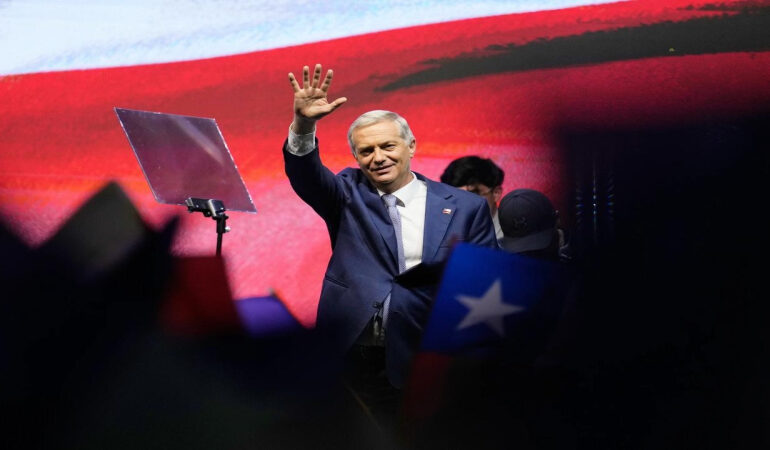

Chile has elected its most conservative president in decades following a decisive runoff victory that reshapes the country’s political direction after more than three decades of centrist governance. Former lawmaker José Antonio Kast secured a clear majority of the vote, defeating a center left challenger and claiming a mandate centered on restoring public order, tightening immigration controls, and reviving economic growth. The outcome reflects growing public concern over crime, migration, and economic stagnation in a nation long viewed as one of Latin America’s most stable democracies. Kast’s victory marks a significant ideological shift and signals voter frustration with recent governing coalitions. Public celebrations followed the announcement of results, while political leaders across the region reacted swiftly, framing the election as part of a wider regional trend toward conservative leadership amid economic and social uncertainty.
Kast’s political profile is closely tied to moral conservatism and a strong emphasis on authority, security, and traditional values. A devout Catholic and longtime critic of progressive social policies, he has pledged to expand police and military powers, construct new high security prisons, and pursue large scale deportations of undocumented migrants. His campaign also emphasized reducing public spending and lowering corporate taxes as tools to restore economic momentum. These positions resonated with voters alarmed by rising crime and weakened growth but have also raised concerns among human rights advocates and civil society groups. Kast’s personal and ideological background has drawn scrutiny, particularly regarding historical associations and his opposition to abortion and same sex marriage in an increasingly pluralistic society.
Despite the size of his electoral mandate, Kast will face structural constraints as he prepares to govern. His party lacks a congressional majority, requiring negotiation with more moderate political forces to advance legislation. Analysts suggest that his ability to balance campaign rhetoric with pragmatic governance will shape both domestic stability and international perception. The election has also drawn attention within global Church and ethics circles, given Kast’s open identification with Catholic moral positions and their intersection with state policy. As Chile enters a new political phase, the administration’s approach to governance, rights, and institutional balance will be closely watched both regionally and internationally.