
Christmas Voices That Still Speak to a Wounded World
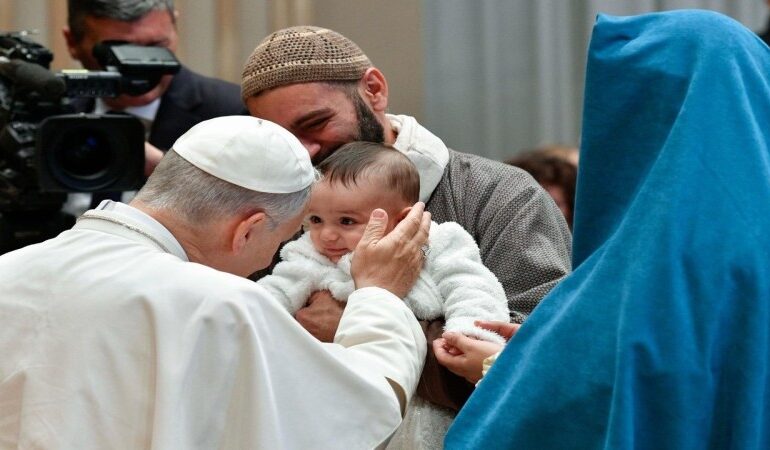

Christmas within the Catholic tradition has consistently been framed not as an escape from history, but as a response to it. Across decades marked by war, social upheaval, illness, migration, and moral uncertainty, the voices of the Popes have returned to the Nativity as a point of light addressing humanity’s deepest wounds. From the Second World War to the present Holy Year, Christmas messages have carried a shared conviction that suffering does not silence hope, but sharpens its urgency. The Church’s reflection on the birth of Christ has repeatedly unfolded against the backdrop of collective trauma, offering language that connects faith with lived reality. These messages have not been abstract theological exercises, but public interventions shaped by historical moments, reminding believers that Christmas speaks directly to fear, injustice, and human fragility rather than standing apart from them.
During the darkest years of the twentieth century, the Christmas message of Pius XII emerged as a rare moral signal amid silence. As war devastated Europe and entire communities faced systematic annihilation, his Christmas radio address spoke of a suffering humanity illuminated by the light of Bethlehem. Without naming perpetrators, he acknowledged those condemned to death solely because of nationality or ancestry, placing their fate within the conscience of the world. In later decades, John XXIII embodied a pastoral closeness by visiting sick children on Christmas Day, transforming the feast into a moment of tenderness rather than ceremony. The message of Christmas became personal, grounded in presence and compassion, affirming that hope often takes shape through attention to those most easily overlooked.
As social and economic tensions reshaped societies, Christmas messages continued to move beyond church walls. In 1968, Paul VI brought Christmas into an industrial setting, celebrating the feast among steelworkers and confronting the widening gap between labor and religious life. His words acknowledged misunderstanding and distance, while insisting that Christ belonged within the world of work and struggle. At the threshold of a new millennium, John Paul II framed Christmas as a gateway into hope for a wounded world, opening the Holy Door as a symbol of mercy that excluded no one. These gestures reinforced a pattern in Vatican tradition where Christmas becomes a moment of engagement with structural and spiritual fractures shaping modern life.
In more recent reflections, the Christmas message has increasingly focused on displacement, time, and forgotten margins. Benedict XVI questioned whether contemporary society still makes room for God, especially in its treatment of migrants and the poor, linking the Nativity to hospitality and attention. Francis has echoed this call by urging believers to carry hope into prisons, war zones, and places marked by despair, presenting Christmas as an active task rather than a passive celebration. Looking ahead, Leo XIV has described Christmas as a feast of light even amid lingering darkness, reinforcing a continuity of thought that spans generations. Together, these voices reveal a consistent Vatican perspective where Christmas remains inseparable from the condition of the world it seeks to heal.