


Church and State Balance in Digital Governance
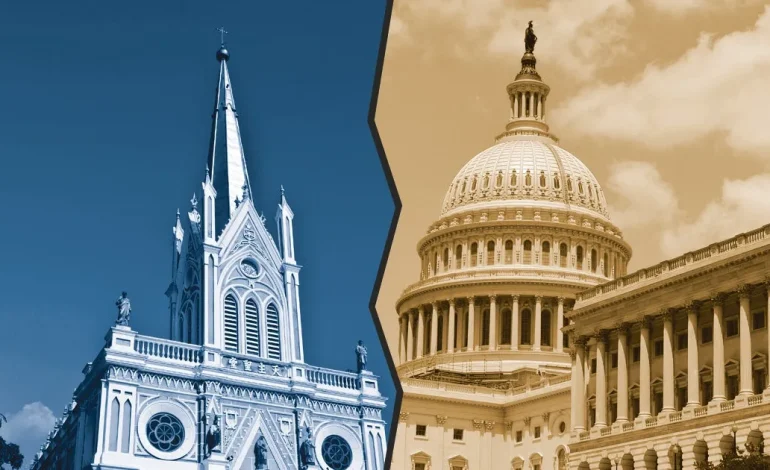

As digital systems increasingly influence public life, the boundaries between Church, state, and technology are being redrawn. The rise of artificial intelligence, data-driven policy, and algorithmic decision-making has created a new form of governance that extends beyond traditional structures of power. These developments offer unprecedented efficiency but also raise profound ethical and moral questions about human dignity, freedom, and justice.
The Church, long a moral compass in times of transformation, is now engaging deeply with the question of digital governance. Rather than resisting technological change, it seeks to guide it through a framework rooted in moral responsibility and human-centered values. In this sense, the balance between Church and state in the age of digital governance is not about control, but about cooperation in pursuit of ethical progress.
The Moral Dimension of Digital Policy
Governance in the digital age relies increasingly on systems that process data and automate decisions. Governments use artificial intelligence to manage welfare programs, regulate trade, and even monitor security threats. While these tools promise objectivity and precision, they can also reinforce inequality, exclude marginalized communities, or erode privacy. The Church emphasizes that such policies must never sacrifice human dignity for efficiency.
Faith-based perspectives bring a critical moral voice to this conversation. The Church insists that digital governance should protect the person rather than reduce them to data points. Human beings, it teaches, are not merely subjects of algorithms but moral agents with inherent worth. The challenge, therefore, is to ensure that systems designed for governance remain guided by the ethical principles of fairness, compassion, and transparency.
Policymakers have begun to acknowledge the moral implications of digitalization, yet many governance models still lack clear frameworks for accountability. The Church argues that laws and regulations must evolve alongside technological development, ensuring that moral insight keeps pace with innovation. By doing so, societies can avoid the risk of creating systems that are technically advanced but ethically hollow.
Collaboration Between Faith and the State
In the past, discussions about the Church and state focused on power, influence, and autonomy. Today, the relationship has entered a new phase defined by shared responsibility. Governments increasingly turn to ethical and philosophical institutions for guidance in managing the consequences of digital transformation. The Church, with its global reach and centuries of moral reflection, plays a unique role in shaping public conscience in this era of complexity.
Through education and dialogue, faith-based organizations contribute to building ethical awareness in public administration. By encouraging empathy, transparency, and respect for human rights, they help governments navigate the tension between technological ambition and moral responsibility. This collaboration does not undermine the separation of Church and state but enriches it with a shared commitment to human welfare.
In many countries, religious and civic leaders have begun to participate in discussions about digital privacy, surveillance, and data ownership. The Church has called for a global ethical framework that prevents the misuse of technology for manipulation or exploitation. Such frameworks should promote accountability among both public institutions and private corporations, ensuring that technology serves humanity rather than controlling it.
Building Ethical Digital Societies
The idea of digital governance extends beyond government institutions. It encompasses all systems that regulate digital life, from financial networks and media platforms to educational databases. The Church sees in this expansion both a challenge and an opportunity.
The challenge lies in protecting the moral fabric of society when decisions are made by systems that lack empathy or spiritual understanding. The opportunity lies in using technology to foster justice, inclusion, and solidarity. For example, digital education programs inspired by faith-based organizations have already begun teaching ethical reasoning alongside technical skills. This helps young people navigate a world where technology is omnipresent but morality is often overlooked.
Furthermore, the Church calls for stronger protection of individual rights in digital governance. Privacy, freedom of expression, and access to truthful information are seen as extensions of human dignity. Ethical governance must ensure that these rights are upheld, even when convenience or efficiency seem to demand compromise. By championing these principles, the Church acts as a moral guardian in a world that often measures success in purely technological terms.
Guiding the Digital Future
The balance between Church and state in digital governance is not static; it is an ongoing negotiation that reflects the evolving needs of society. The Church does not seek to dominate policy but to influence it through moral reasoning and advocacy. Its goal is to ensure that digital progress aligns with the ethical principles of justice, compassion, and respect for life.
The dialogue between faith and government can help prevent the dehumanization that sometimes accompanies technological change. As governments develop policies on artificial intelligence, data ethics, and digital rights, the Church can provide an enduring reminder that all governance must serve humanity first.
In the end, digital governance is not only a matter of algorithms and regulations. It is a test of moral imagination. It challenges societies to build systems that combine innovation with conscience, progress with empathy, and intelligence with humility. The Church, with its enduring vision of human dignity, stands ready to help shape this balance, ensuring that technology remains a tool for good rather than a substitute for moral wisdom.