
Church of the Holy Sepulcher Remains Closed Amid Ongoing Regional Conflict
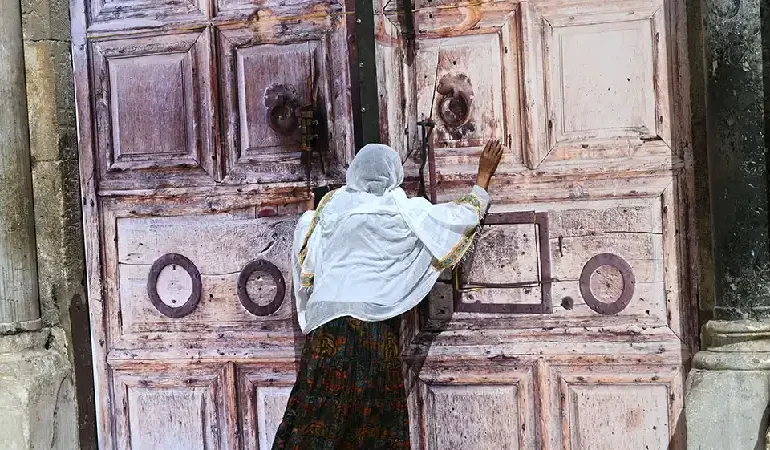

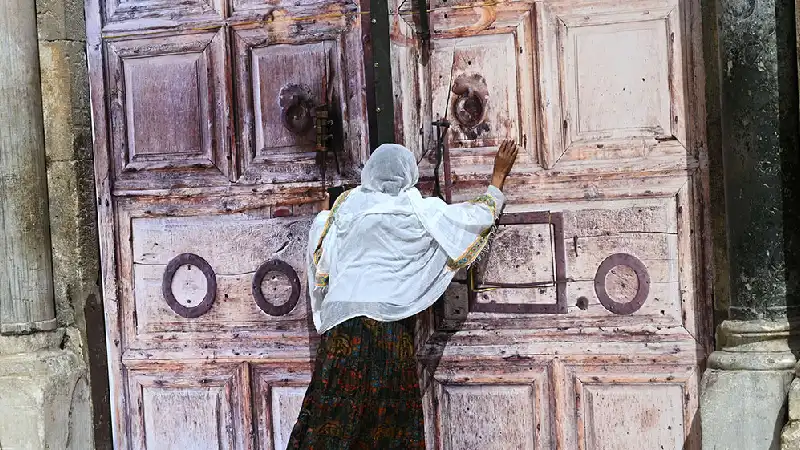
The Church of the Holy Sepulcher in Jerusalem has remained closed as security measures continue during escalating tensions linked to the ongoing conflict involving Israel and Iran. Authorities ordered the closure of major religious sites in the Old City, including key locations for multiple faiths, citing the need to protect civilians from potential attacks. The decision has significantly affected religious life in one of Christianity’s most sacred locations, where access is typically shared among several denominations and attracts pilgrims from around the world throughout the year.
Officials stated that the closures were implemented as a precaution to prevent mass gatherings during a period of heightened security risk. Reports indicated that missile activity in proximity to the Old City reinforced concerns about public safety, prompting authorities to limit access to sensitive areas. While some churches outside the central zone have remained open, the Church of the Holy Sepulcher, which holds deep spiritual significance as the site associated with the burial and resurrection of Jesus, has remained inaccessible to the public under current restrictions.
Church representatives have expressed concern about the impact of the closures on worshippers, particularly with major religious observances approaching. Plans for Holy Week and Easter celebrations are now uncertain, with expectations that services may be limited to clergy and conducted without public attendance if restrictions remain in place. Religious leaders are seeking dialogue with authorities to explore the possibility of allowing limited participation, emphasizing the importance of maintaining spiritual practices even during periods of crisis.
The situation is further complicated by the unique governance structure of the Church of the Holy Sepulcher, which operates under a longstanding agreement regulating shared access among different Christian communities. This arrangement typically ensures coordinated use of the site for liturgical services, but current conditions have disrupted normal operations. The closure highlights how geopolitical tensions can directly affect religious institutions and long established traditions, particularly in regions where multiple faiths intersect within a single historical and spiritual space.
Beyond the Church, broader restrictions in the Old City have also affected other religious groups, limiting access to important sites and gatherings during significant periods of observance. Residents and worshippers have faced movement restrictions, adding to the challenges posed by the security situation. As the conflict continues, the future of access to these sacred locations remains uncertain, with both authorities and religious leaders balancing concerns over safety with the need to preserve religious freedom and continuity of worship.