


Congo bishop warns ongoing violence risks normalizing suffering as mass grave discovery shocks region

A Catholic bishop in eastern Democratic Republic of Congo has warned that relentless violence is pushing communities toward despair, following the discovery of more than 170 bodies in mass graves near Uvira. Sébastien-Joseph Muyengo Mulombe described the situation as a deceptive calm, calling it a “graveyard peace” where violence continues silently beneath the surface. The findings have intensified fears about the scale of atrocities in the region, where armed conflict between government forces and rebel groups has left civilians exposed to extreme brutality and ongoing instability.
The bishop said the victims included not only civilians accused of supporting the army, but also young people who resisted forced recruitment and families who opposed armed groups. He warned that such acts are tearing apart the social fabric, creating deep trauma and cycles of revenge that could last for generations. According to local accounts, violence has become so frequent that communities risk becoming desensitized, a development he described as one of the most dangerous consequences of prolonged conflict. The breakdown of trust, he added, is undermining both social cohesion and prospects for reconciliation.
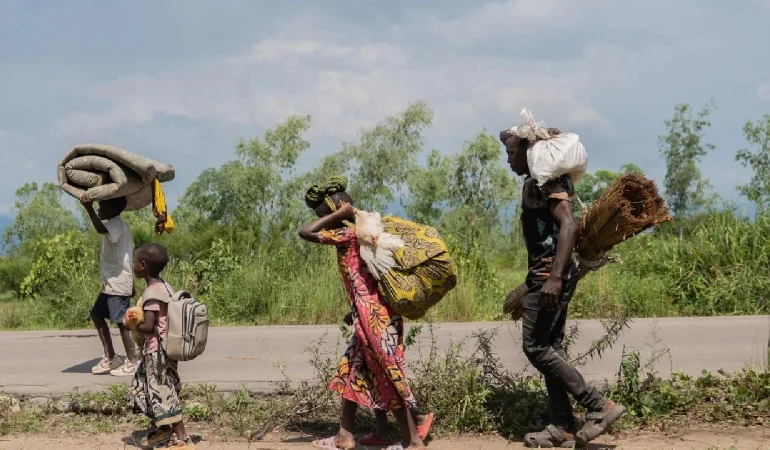
Addressing the broader humanitarian crisis, the bishop highlighted the scale of displacement, with hundreds of thousands forced to flee to neighboring countries or overcrowded camps. He described dire living conditions, including lack of food, shelter and medical care, with reports of daily deaths linked to disease and exposure. Despite security challenges, the Church continues to provide limited support through local networks, focusing on delivering essential aid and maintaining spiritual care. He emphasized that even a single life lost unjustly should remain a global concern, regardless of statistics.
The bishop also criticized the international response, questioning the effectiveness of global institutions in resolving the crisis. He warned against proposals that link access to Congo’s mineral wealth with promises of peace, describing such arrangements as potential traps that risk undermining national sovereignty. In his view, agreements driven by external interests could deepen tensions rather than address the root causes of the conflict. He called for solutions grounded in justice, accountability and genuine respect for the rights and future of the Congolese people.
Reflecting on the role of the Church, the bishop said its mission remains rooted in truth, justice and solidarity with the most vulnerable, even in the face of threats and criticism. He acknowledged the difficulty of preaching forgiveness while violence continues, but stressed that lasting peace requires moral transformation and collective responsibility. Drawing on broader historical examples, he argued that unity and cooperation are essential to overcoming cycles of conflict, warning that divisions based on power, land and identity can lead to prolonged instability if left unaddressed.