


Conscience Protections Are Becoming the Church’s Quiet Legal Strategy


Across Western democracies, debates over church and state are no longer defined by overt clashes between religious authority and civil power. Instead, tension increasingly emerges around narrower questions of conscience. As laws expand into ethically sensitive areas of life, Catholic institutions and individuals are focusing less on opposing legislation outright and more on securing legal space for moral non participation.
This approach reflects a sober assessment of modern governance. Secular legal systems are firmly established and continue to evolve independently of religious doctrine. At the same time, moral disagreement has not disappeared. The Church’s legal engagement now centers on how ethical boundaries can coexist with binding public law without forcing uniformity of conscience.
Conscience as a Legal Shield Rather Than a Weapon
The Church’s emphasis on conscience protections represents a strategic shift in how it engages legal systems. Rather than framing disputes as battles over authority, conscience is presented as a personal and institutional safeguard. This reframing reduces confrontation while preserving moral integrity.
By treating conscience as a boundary rather than a demand, Catholic institutions argue for the right to abstain from certain actions without seeking to impose beliefs on others. This approach aligns with democratic principles by allowing participation in public life without coercion. It also reframes religious liberty as a protective measure rather than an expansion of power.
Why Moral Non Participation Is Gaining Ground
Moral non participation has become a central concept because it acknowledges legal reality while preserving ethical coherence. Catholic hospitals, schools, and charities often operate within state regulated systems. Their request is not exemption from law, but accommodation within it.
Courts and legislatures increasingly recognize that forcing participation in morally contested actions can undermine social cohesion. Allowing conscience based limits helps prevent legal systems from becoming instruments of compulsion. This reasoning has contributed to cautious openness toward conscience protections in several Western legal contexts, particularly in the United States.
Pluralism Requires Ethical Boundaries
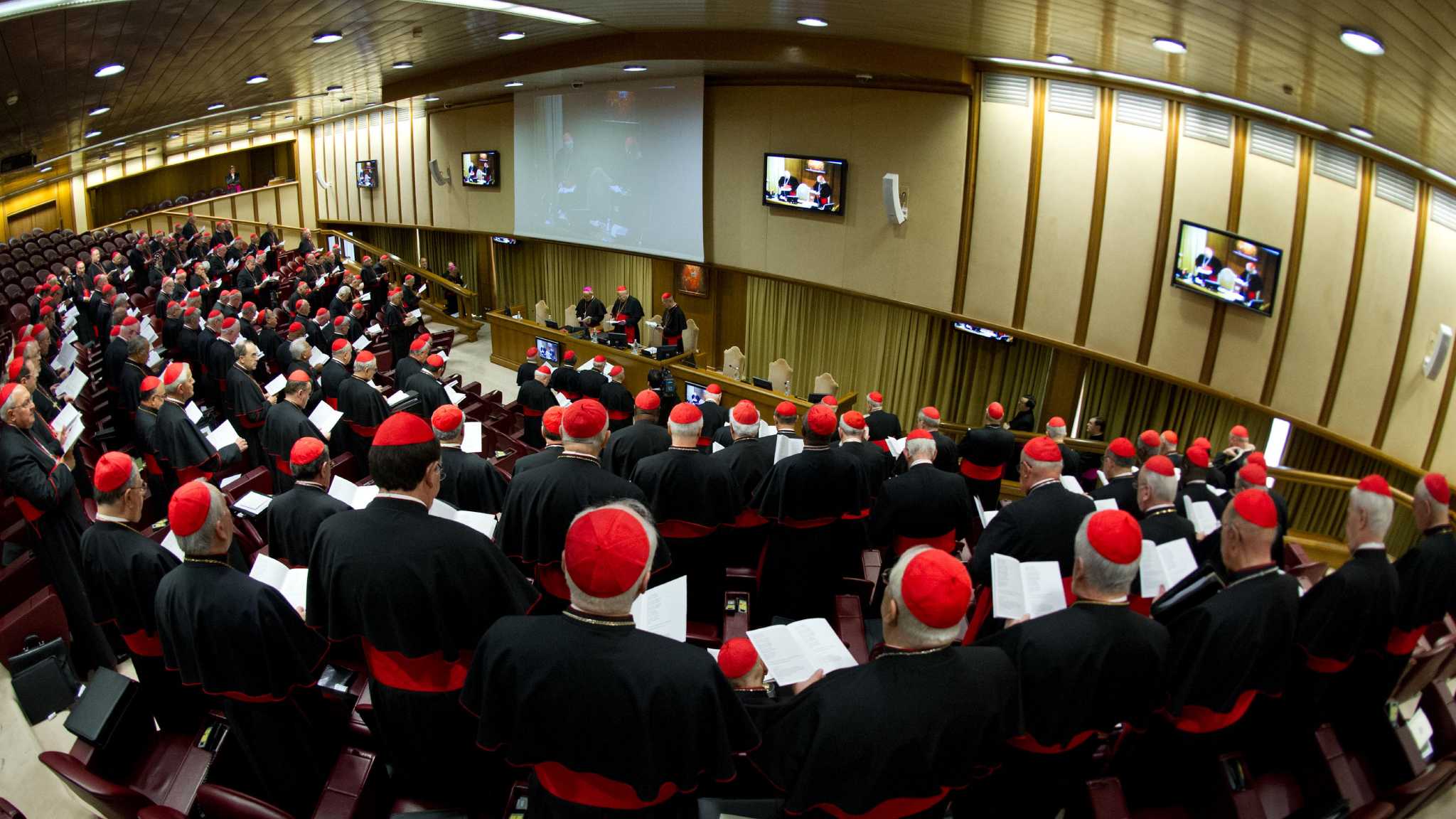
Pluralism is often described as the coexistence of diverse beliefs within a shared legal framework. The Vatican’s legal reasoning emphasizes that pluralism cannot function if ethical dissent is excluded. A system that tolerates difference only at the level of opinion, but not action, risks becoming internally contradictory.
By advocating conscience protections, the Church argues that ethical boundaries strengthen pluralism rather than weaken it. When legal systems recognize limits to participation, they affirm that diversity includes moral agency. This perspective reframes dissent as a stabilizing feature of democracy rather than a disruption.
A Measured Vatican Legal Posture
The Vatican’s interventions in church and state disputes are increasingly restrained and targeted. Rather than issuing sweeping condemnations, diplomatic and legal engagement focuses on specific protections. This measured posture reflects an understanding that credibility depends on proportionality.
Such restraint also signals respect for constitutional structures. By working within existing legal mechanisms, the Church avoids the perception of challenging state legitimacy. This approach reinforces the idea that conscience protections are compatible with secular governance and essential for its long term legitimacy.
Conclusion
Conscience protections have emerged as the Church’s quiet legal strategy in an era of expanding secular law. By prioritizing moral non participation, the Vatican advances an approach grounded in realism, restraint, and respect for pluralism. This strategy preserves ethical integrity while engaging constructively with democratic systems, positioning conscience not as obstruction but as a necessary boundary for a free and stable society.