


COP30 in Brazil: The Amazon Approaches a Critical Tipping Point
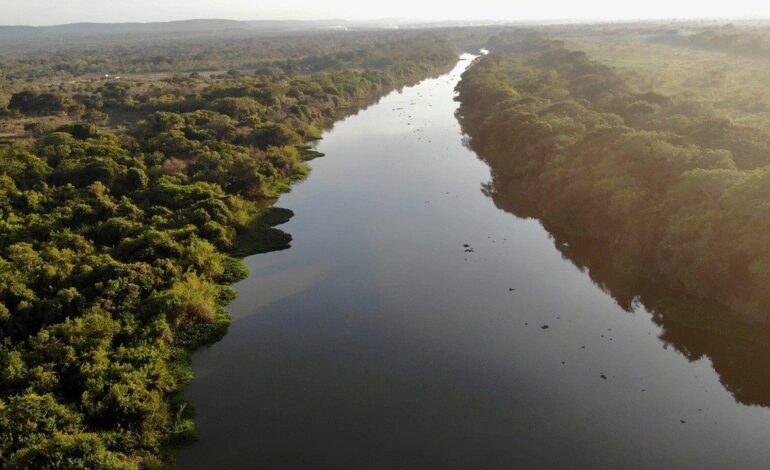

As the world prepares for COP30 in Belém, Brazil, the Amazon, the planet’s largest tropical rainforest, stands at the center of global attention. The decision to hold the UN climate conference at the mouth of the Amazon River is deeply symbolic, reflecting both the region’s vital role in maintaining Earth’s ecological balance and the growing urgency to protect it from irreversible damage.
Stretching across nine nations, Brazil, Peru, Bolivia, Ecuador, Colombia, Venezuela, Guyana, Suriname, and French Guiana, the Amazon covers nearly seven million square kilometers. It is home to more than 34 million people and countless species of plants and animals, many found nowhere else on Earth. But today, scientists warn that the forest is nearing the “point of no return,” when deforestation and climate change could permanently transform vast areas of rainforest into dry savanna.
“This process has already begun in the southern Amazon Basin,” says Jhan-Carlo Espinoza, a Franco-Peruvian researcher with France’s Institute of Research for Development (IRD) and a member of the Science Panel for the Amazon. “Regions in southern Bolivia and Brazil are experiencing longer, more intense droughts. The vegetation is changing, and parts of the rainforest are starting to look like the Cerrado.” He notes that the years 2023 and 2024 brought record-breaking droughts across the basin, while the north suffered devastating floods, a stark sign of a disrupted climate cycle.
The loss is measurable and alarming. Scientists estimate that up to 20 percent of the Amazon has already been cleared, an area roughly the size of France and Germany combined. Another 17 percent is considered degraded by human activity. Once deforestation exceeds 40 percent, researchers believe the ecosystem will no longer be able to sustain itself.
The consequences reach far beyond South America. The Amazon generates half of its own rainfall through the process of evapotranspiration, where trees release moisture back into the atmosphere. This natural cycle not only regulates the rainforest’s humidity but also influences rainfall patterns across the Andes, southern South America, and even distant regions. “Deforestation in Brazil directly affects water supplies in countries like Bolivia and Peru,” Espinoza explains, “and that means it also threatens food production and public health.”
As COP30 approaches, Espinoza and his colleagues from the Science Panel for the Amazon are urging governments to commit to zero deforestation and to rethink economic models that drive forest loss, including soy cultivation and illegal gold mining. He also emphasizes the importance of Indigenous leadership. “Protecting Indigenous territories is essential,” he says. “Their stewardship is key to maintaining the balance between the forest and the atmosphere.”
Indigenous leaders from all nine Amazon nations are expected to play a prominent role at COP30, demanding stronger representation and direct access to climate financing. For them, and for the global community, Belém offers a defining moment: a chance to prevent the Amazon from crossing a threshold beyond which it can never return.