



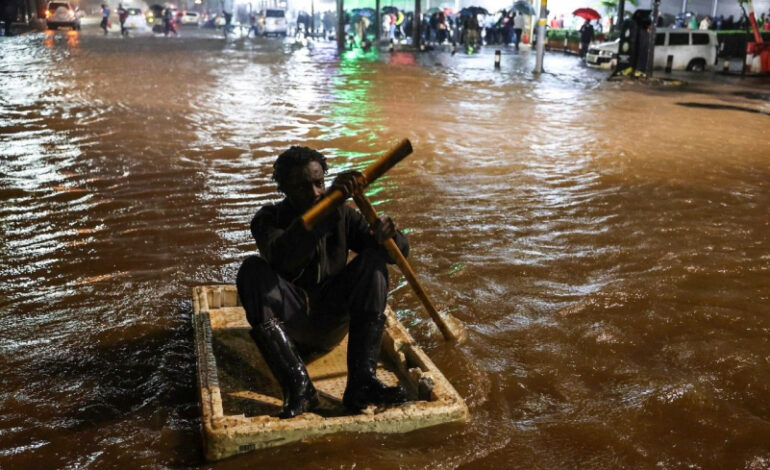

Torrential rains have triggered a major humanitarian crisis in Kenya as flooding continues to devastate large parts of the country, leaving dozens of people dead and tens of thousands displaced. Authorities confirmed that at least 45 people have died following days of intense rainfall that overwhelmed rivers, flooded residential areas, and destroyed vital infrastructure. The capital city Nairobi has been among the hardest hit regions, with entire neighborhoods submerged after streets turned into fast moving streams of water. Emergency teams and humanitarian groups are working to assist families who have lost homes and property while officials warn that the situation may worsen if heavy rains continue.
The scale of the disaster has grown rapidly as search and rescue operations expand across affected areas. Police officials reported that 23 deaths occurred in Nairobi within a single day as floodwaters swept through low lying neighborhoods and commercial districts. National authorities have confirmed dozens of drowning cases linked to the floods while rescue teams continue to search damaged homes and flooded streets for additional victims. Thousands of residents have been forced to evacuate their homes, with official figures indicating more than two thousand people displaced across the country. Local humanitarian organizations believe the true number of displaced residents may be significantly higher.
The floods have caused widespread destruction across several counties, damaging homes, farmland, and public infrastructure. The Kenya Red Cross described the situation as catastrophic as rising waters destroyed property and forced families to seek shelter in temporary locations. In Nairobi, the banks of the Nairobi River reportedly collapsed after prolonged rainfall, sending water rushing through nearby communities. Residents described chaotic scenes as vehicles were swept away and businesses flooded. Shop owners and street vendors in affected areas reported heavy financial losses after water destroyed goods and equipment inside their workplaces.
Transport systems have also been severely disrupted as roads and highways became impassable due to flooding. Major routes around Nairobi experienced significant damage, making it difficult for emergency responders to reach affected neighborhoods. Air travel faced disruption as well after severe weather conditions forced airlines to suspend or divert flights. Kenya Airways reported that several flights scheduled to land in Nairobi had to be rerouted to the coastal city of Mombasa as storm conditions made operations unsafe. Government agencies are now working to repair damaged transport infrastructure and restore essential services to communities cut off by the floods.
The disaster has also reignited criticism over urban planning and drainage infrastructure in rapidly growing cities like Nairobi. Analysts and urban development experts say poor drainage systems and uncontrolled development have intensified the impact of seasonal rains. In densely populated neighborhoods, blocked drainage channels and construction along riverbanks have increased the vulnerability of communities during heavy storms. Residents and local officials have urged authorities to invest more heavily in flood prevention measures and stronger infrastructure in order to reduce the risk of similar disasters in the future.
Scientists studying climate trends in East Africa have warned that extreme weather events are becoming increasingly frequent across the region. Research over the past two decades has documented a pattern of both severe droughts and intense rainfall linked to changing climate conditions. Experts say that rising temperatures, shifting rainfall patterns, and rapid urban expansion are combining to increase the risk of flooding disasters in major cities. Nairobi in particular has been identified as highly vulnerable because of its fast population growth and pressure on land and water management systems.
Rescue teams and humanitarian organizations remain on the ground assisting communities affected by the floods while authorities continue to monitor weather forecasts. Relief efforts include distributing food supplies, providing temporary shelter for displaced families, and searching for people who remain missing after the storms. Government agencies have warned that additional rainfall in several counties could trigger further flooding or landslides, raising concern among residents already struggling to recover from the destruction. As Kenya confronts the aftermath of the disaster, the focus remains on emergency support for affected communities and efforts to rebuild homes and livelihoods.