
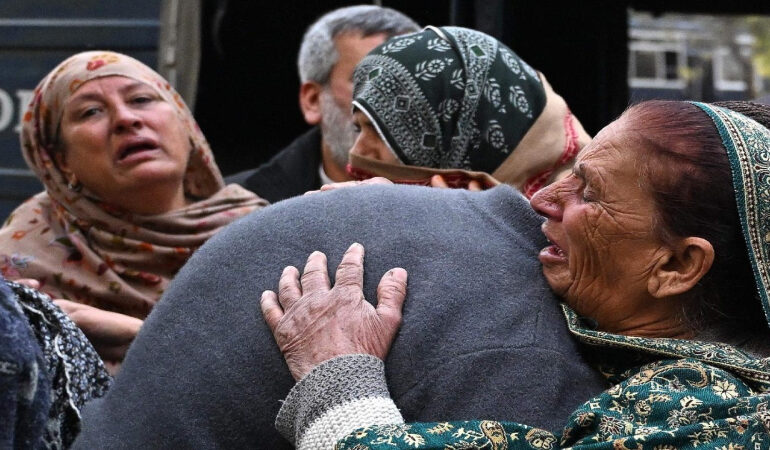

A suicide bombing at a Shiite mosque in Islamabad has left at least 31 people dead and around 170 others injured, marking one of the deadliest attacks in Pakistan’s capital in recent years. The explosion occurred during Friday prayers at the Khadija Tul Kubra mosque in the southeastern part of Islamabad, a time when the building was filled with worshippers, including women and children.
According to police officials at the scene, the attacker was intercepted at the entrance gate of the mosque by security personnel. Moments later, the assailant detonated the explosive device, causing a powerful blast just as prayers were beginning. The force of the explosion resulted in extensive casualties, with many victims suffering critical injuries. Authorities have warned that the death toll may rise further as several of the wounded remain in serious condition in nearby hospitals.
Emergency services and volunteers rushed to the scene to assist the injured, while hospitals across the capital were placed on high alert. Medical staff worked through the evening to treat victims, as families searched anxiously for loved ones amid scenes of grief and shock.
Pakistan’s Deputy Prime Minister and Foreign Minister Ishaq Dar strongly condemned the attack, describing it as a cowardly act against innocent civilians. In a public statement, he said that targeting places of worship violated both human values and Islamic teachings, adding that Pakistan remained united in its resolve to confront terrorism in all its forms.
Security forces quickly cordoned off the area, launching a full investigation into the incident. Bomb disposal units, forensic teams, and intelligence officials were deployed to gather evidence and determine how the attacker managed to approach the mosque despite existing security measures. No group has so far claimed responsibility for the attack.
Shiite Muslims form a minority in predominantly Sunni Pakistan and have frequently been targeted in sectarian violence over the past two decades. Militant organizations have previously carried out attacks against Shiite communities, accusing them of heresy. Among the groups historically linked to such violence is Tehreek-e-Taliban Pakistan, although there is currently no confirmation of its involvement in this incident.
The bombing has revived painful memories of earlier attacks in the capital. In November last year, a separate suicide bombing in Islamabad killed 12 people, though that attack also remained unclaimed. Analysts note that while Islamabad has generally been considered more secure than other regions, recent incidents highlight persistent security challenges.
Religious leaders and civil society groups across the country expressed solidarity with the victims and called for calm, urging authorities to strengthen protection around religious sites. Many emphasized that violence against worshippers undermines social harmony and threatens national stability.
As Pakistan mourns the victims, the attack has once again raised urgent questions about counterterrorism strategies, sectarian harmony, and the safety of religious minorities. For families affected by the tragedy, the focus remains on healing and justice, as the nation confronts yet another reminder of the human cost of extremism.