


Displaced Gazans Face Growing Flood and Health Risks
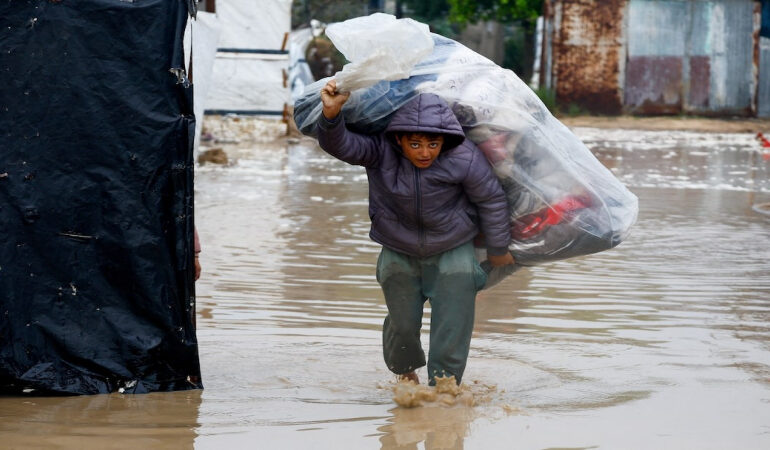

Hundreds of thousands of displaced residents in Gaza are facing escalating humanitarian risks as heavy winter rains flood makeshift shelters and emergency supplies remain restricted from entering the territory. Large areas of tent camps have been inundated after torrential rainfall swept through low lying and rubble filled zones where families have sought refuge following prolonged conflict. Humanitarian agencies warn that many of these shelters were never designed to withstand severe weather, leaving displaced people exposed to cold temperatures, water damage, and unsafe living conditions. The flooding has already resulted in casualties, including children affected by exposure, while structural collapses have added to the sense of insecurity. The situation highlights how environmental stress is compounding an already fragile humanitarian landscape, particularly for families living in overcrowded and informal settlements.
The crisis is being intensified by delays and restrictions on the entry of materials needed to reinforce shelters and manage floodwaters. Essential items such as timber, plywood, sandbags, and water pumps have not reached affected areas at the scale required, limiting the ability of humanitarian workers to stabilize camps and protect families. As water pools around tents, bedding, clothing, and food supplies are being destroyed, pushing already vulnerable households closer to acute deprivation. Aid officials have also raised concerns about inadequate drainage and waste management systems, which increase the likelihood of disease outbreaks in densely populated camps. These risks are particularly severe for children, the elderly, and those with existing health conditions, underscoring the interconnected nature of shelter, sanitation, and public health during emergencies.
From a broader ethical and global church perspective, the unfolding situation raises pressing questions about the protection of civilians and the moral responsibilities of the international community. Faith based humanitarian principles emphasize the dignity of every person and the obligation to safeguard life, especially in contexts of displacement and conflict. The inability to deliver timely emergency assistance during extreme weather events illustrates how access constraints and political disputes can have immediate human consequences. As winter conditions persist, humanitarian organizations continue to warn that without improved access and coordinated action, preventable suffering will increase. The crisis in Gaza serves as a stark reminder that environmental hazards, when combined with prolonged conflict and limited humanitarian corridors, can rapidly evolve into large scale human emergencies demanding sustained global attention.