
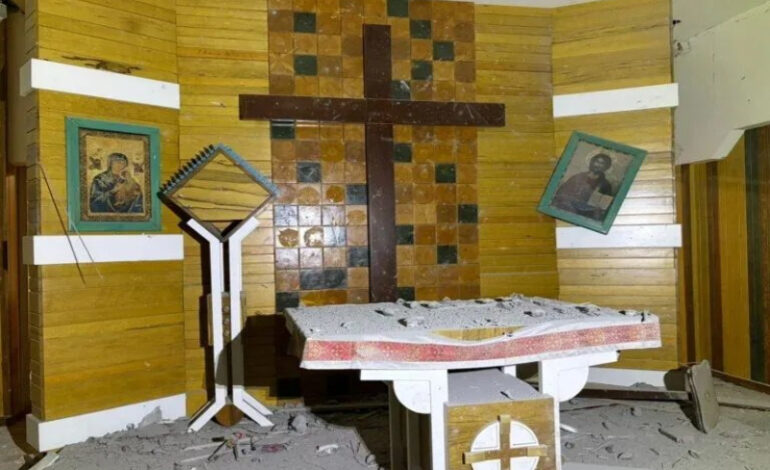

A drone strike targeting a Catholic residential complex in northern Iraq has shaken the local Christian community and revived memories of past violence that forced thousands of believers from their homes. The attack struck a Chaldean Catholic complex in Ankawa, a suburb of Irbil, on March 4, damaging the chapel within the compound but leaving residents unharmed.
The complex, which includes a chapel, convent, and housing facilities connected to the Chaldean Catholic Church, serves as an important center for the local Christian population. According to church authorities, the explosive drone hit part of the building, causing significant structural damage to the chapel.
Archbishop Bashar Warda of Irbil confirmed that no injuries were reported in the incident and expressed relief that the damage was limited to property. He said the residents had already evacuated the building several days earlier because of security concerns related to escalating regional tensions.
Although no casualties occurred, the attack has deeply unsettled Christians living in the area. Archbishop Warda explained that the incident has reopened painful memories for many believers who previously endured persecution and displacement during years of conflict in Iraq.
The Chaldean community in northern Iraq suffered heavily during the rise of the Islamic State group more than a decade ago, when militants targeted Christian towns and villages, forcing thousands of families to flee. Many of those displaced families later found shelter in church supported housing and residential complexes in the Kurdish region.
For many residents, the recent drone strike has revived fears connected to those earlier traumatic experiences. Church leaders say the atmosphere among local faithful has been marked by anxiety as uncertainty continues to grow across the wider region.
Archbishop Warda described the emotional impact of the attack, explaining that many people attending daily Mass have expressed concern about the instability surrounding them. He said the community continues to carry deep memories of past conflicts that devastated Christian communities across Iraq.
Northern Iraq has endured decades of war, sectarian violence, and displacement that have reshaped its social landscape. Christian communities, which once formed a significant part of the population, have been particularly affected by waves of violence and insecurity.
The residential complex struck in the attack was originally built with support from the Knights of Columbus and provides housing for church workers as well as families who had previously fled extremist violence. Over time, the facility has become both a spiritual and humanitarian center for displaced Christians seeking stability after years of upheaval.
Church officials said security forces and civil defense teams quickly arrived at the site following the explosion to assess the damage and secure the area. The attack also raised new questions about the vulnerability of civilian and religious sites in a region that continues to experience instability.
Despite the renewed fears, Archbishop Warda emphasized that the Christian community continues to rely on faith and hope in the face of uncertainty. He called for solidarity from Christians around the world and urged continued prayer for peace and stability in Iraq and across the Middle East.