

Eastern Christians Mark Faith and Resilience Before Christmas

Christian communities across the Middle East and Eastern Europe marked the approach of Christmas with acts of remembrance, celebration, and renewal, reflecting both resilience under pressure and adaptation to changing realities. In Damascus, faithful gathered days before Christmas at the Church of Mar Elias, a site still bearing the memory of a deadly suicide attack that struck during the Divine Liturgy months earlier. Prayer, hymns, and tributes to those killed were offered beneath what is now the largest Christmas tree in Syria, erected on the same grounds. For local Christians, the gathering was both an act of mourning and a public witness of continuity, signaling that violence has not erased communal faith or presence. The event underscored the fragile position of Christian minorities in the region while highlighting their determination to maintain liturgical life and public expression despite ongoing insecurity.
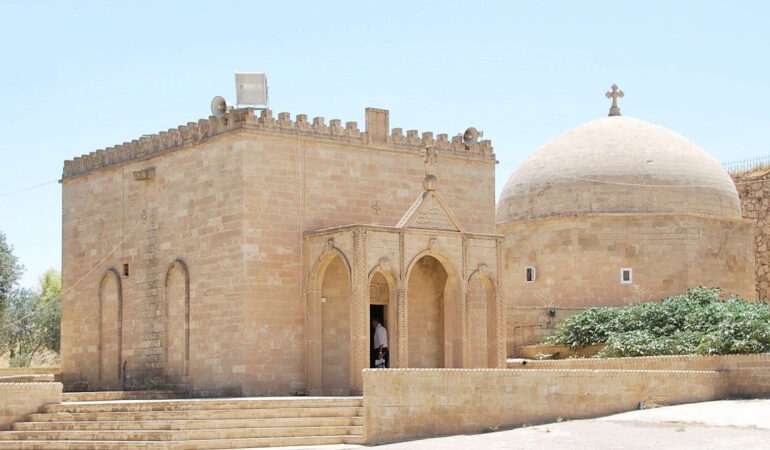
In northern Iraq, the annual feast of the martyrs Mar Behnam and Sara once again drew large numbers of pilgrims to the monastery near Qaraqosh, reaffirming the enduring role of shared memory in sustaining Christian identity. The celebration, led by the Syriac Catholic bishop of the diocese, recalled the fourth century witnesses whose conversion and execution remain central to local devotion. Their story continues to resonate strongly in a country where Christian communities have endured displacement, destruction of heritage, and demographic decline over recent decades. The popularity of the feast reflects more than historical remembrance, serving instead as a moment of collective affirmation rooted in continuity with the past. In a region where rebuilding remains uneven, such gatherings reinforce social cohesion and offer a rare space where faith, culture, and communal survival intersect visibly.
Further north, the Ukrainian Greek Catholic Church has turned to digital outreach as a means of sustaining faith formation amid war, migration, and dispersal. A new children’s YouTube channel, Svitlyk, has been launched to provide age appropriate religious content focused on prayer, storytelling, and Christian values. Designed for young children, particularly those living outside Ukraine, the project aims to maintain spiritual connection and cultural continuity across borders. Developed by volunteers with support from clergy and catechists, the initiative reflects a broader shift within Eastern Churches toward digital tools as pastoral necessities rather than optional supplements. Together, these developments illustrate how Eastern Christian communities are navigating insecurity, memory, and modern communication, balancing fidelity to tradition with practical responses to contemporary challenges shaping their future.