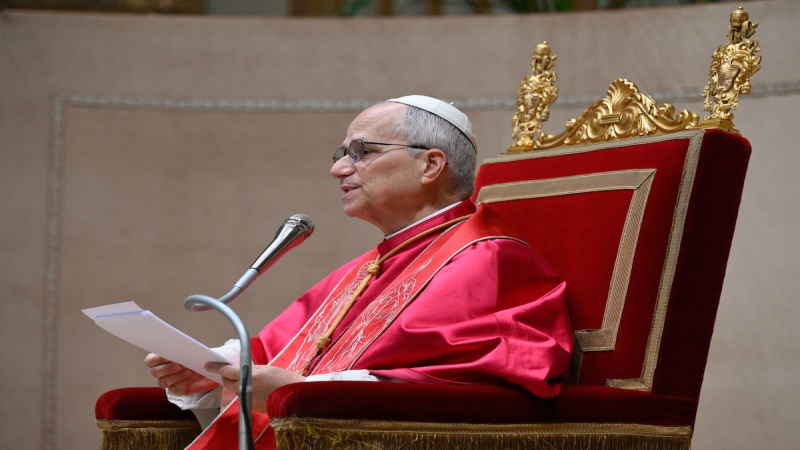


Gintaras Grušas has urged Christians across Europe to place peace at the center of the annual Week of Prayer for Christian Unity, as conflicts and geopolitical tensions continue to destabilize large parts of the world. In his role as president of the Council of European Bishops’ Conferences, the archbishop addressed leaders of Catholic bishops’ conferences with a call to renewed spiritual focus, presenting prayer not as a symbolic gesture but as a shared responsibility. He framed unity among baptized Christians as a force capable of shaping attitudes beyond church boundaries, especially in societies marked by polarization and violence. The appeal follows the recent signing of an updated Charta Oecumenica, which he described as a timely reminder that Christian cooperation has direct implications for peace. His message situates prayer within the public realities of war and instability, suggesting that spiritual unity can influence broader efforts toward reconciliation.
The archbishop emphasized that prayer remains central to the ecumenical movement, drawing attention to the annual week of common prayer as a moment when churches visibly express shared commitment. He encouraged European church leaders to highlight peace as a specific intention, noting that persistent armed conflicts and rising international tensions demand a renewed moral response. In his letter, he pointed to the approaching twenty fifth anniversary of the original Charta Oecumenica as an opportunity for reflection on how far cooperation among churches has progressed and where it requires deeper engagement. Rather than presenting unity as an abstract ideal, he connected it to concrete outcomes, arguing that prayer shapes conscience and fosters responsibility. By placing peace at the forefront, the appeal acknowledges that churches cannot remain indifferent to the conditions shaping human suffering, even when solutions appear distant.
The revised Charta Oecumenica represents an important moment in Europe’s ecumenical journey, reaffirming commitments to dialogue, cooperation, and shared witness among Christian traditions. The document was prepared through collaboration between Catholic and other Christian bodies, including the Conference of European Churches, reflecting a deliberate effort to strengthen common ground. Church leaders are now encouraged to engage actively with the updated text within their local contexts, integrating its principles into formation, prayer, and public engagement. The archbishop’s appeal underscores that reception of the Charta is not limited to institutional endorsement but requires sustained practice. This process, he suggested, can help churches respond more coherently to social and political challenges, especially those that threaten peace and human dignity across the continent.
In entrusting the renewed ecumenical effort to spiritual intercession, the appeal highlights continuity between prayer, unity, and responsibility. The archbishop expressed hope that unity among Christians might also inspire reconciliation among parties locked in conflict, extending the scope of prayer beyond ecclesial concerns. By invoking shared spiritual figures and traditions, the message reinforces a sense of common heritage that transcends national and denominational lines. The call comes at a moment when Europe faces both internal division and external pressure, raising questions about the moral voice of religious institutions. Rather than proposing policy solutions, the appeal positions prayer as a starting point for deeper engagement. It presents unity not as an end in itself, but as a resource for peace that requires patience, humility, and sustained commitment from churches and believers alike.