
Faith After Certainty How European Catholics Are Re Learning Belief in an Age of Fragmentation

In many parts of Europe, Catholic identity once arrived quietly and predictably through family, parish, and local custom. Faith was absorbed through repetition, tradition, and social belonging. Today, that inherited certainty has weakened, not because belief has vanished, but because the cultural scaffolding that once supported it has thinned.
Across cities and rural communities alike, younger Catholics are encountering faith in a very different environment. Pluralism, digital life, and moral complexity shape how belief is approached. For many, Catholicism is no longer something assumed. It is something questioned, explored, sometimes resisted, and increasingly chosen with intention rather than habit.
Faith as a Personal Decision Rather Than a Cultural Given
For much of Europe’s history, religious affiliation was deeply tied to national identity and family continuity. Attendance, sacraments, and moral teaching flowed naturally from one generation to the next. That model is now fading. Younger Catholics are growing up in societies where faith is one option among many, rather than a default framework for meaning.
This shift has not simply produced indifference. Instead, it has introduced a more reflective posture toward belief. Young adults often encounter Catholic teaching after exposure to secular ethics, other religions, or none at all. When faith takes root under these conditions, it is often marked by deliberation. Belief becomes a response to personal questions about purpose, community, and moral coherence rather than social expectation.
This environment has reduced automatic participation but deepened engagement among those who remain. Parish life may be smaller, yet it is often more intentional. Many young Catholics describe their faith less in terms of obligation and more in terms of discernment, prayer, and lived conviction.
Digital Culture and the Fragmentation of Authority
The digital world has profoundly reshaped how belief is encountered and interpreted. Online spaces expose young Catholics to an immense range of voices, theological opinions, critiques, and alternative spiritual paths. Authority is no longer encountered primarily through local clergy or parish structures but through screens and algorithms.
This fragmentation presents both risk and opportunity. Confusion and misinformation can erode trust and clarity. At the same time, digital platforms allow access to Scripture, Church teaching, and global Catholic voices that were once distant. Many young believers report navigating faith through online reading, podcasts, and discussion rather than formal instruction.
The challenge for the Church lies in offering guidance without retreating into defensiveness. In a digital landscape that prizes authenticity, credibility is built through clarity, humility, and coherence between teaching and witness.
Moral Fatigue and the Search for Coherence
European societies today are saturated with moral debate. Questions around identity, justice, technology, and human dignity surface constantly in public life. For many young adults, this produces moral exhaustion rather than clarity. Competing narratives offer few stable reference points.
Within this context, Catholic moral teaching is sometimes encountered not as restriction but as structure. Young Catholics who engage deeply often describe the faith as offering a coherent moral vision grounded in human dignity and responsibility. The appeal lies less in rules and more in an integrated understanding of the person, community, and transcendence.
This does not mean unquestioning acceptance. Doubt remains present. Yet faith becomes a framework for wrestling honestly with moral complexity rather than escaping it.
Community as Anchor in a Dispersed World
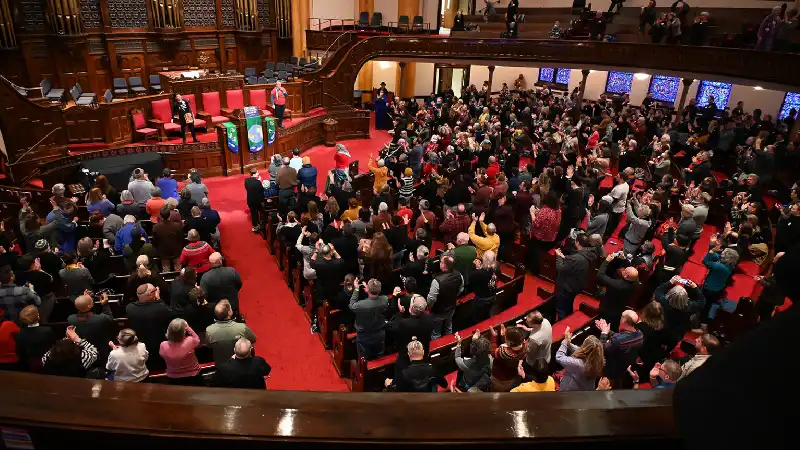
Despite individualization, community remains central to how belief is sustained. Small faith groups, student chaplaincies, and intentional parish communities play an increasing role in nurturing belief. These spaces offer dialogue, shared prayer, and accompaniment rather than rigid conformity.
Young Catholics often seek communities where questions are welcomed and lived experience is respected. The Church’s pastoral challenge is not to recreate past social dominance, but to cultivate spaces of belonging where faith can mature amid uncertainty.
Conclusion
Faith in Europe has not disappeared. It has changed its posture. As inherited certainty fades, belief is increasingly rediscovered through choice, reflection, and lived encounter. For many young Catholics, faith now emerges not from cultural momentum but from a desire for meaning, coherence, and hope in a fragmented world.