Filipinos in Rome Mark 40 Years Since EDSA People Power with Prayer and Reflection
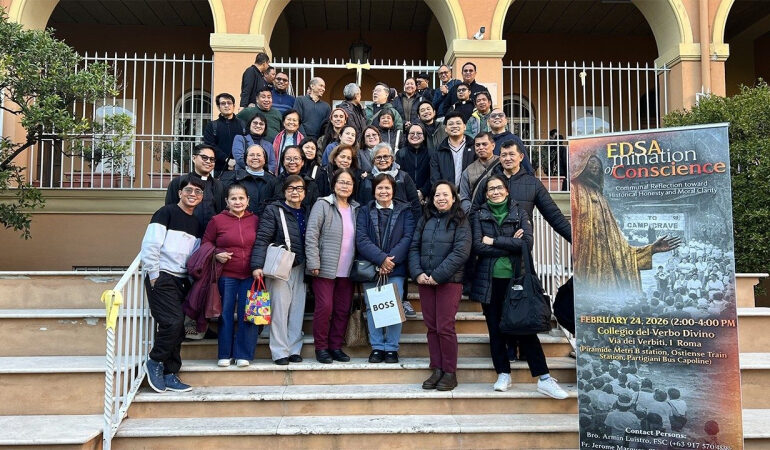

Filipinos living in Rome gathered this week to commemorate the 40th anniversary of the EDSA People Power Revolution, remembering the peaceful movement that brought an end to two decades of dictatorship in the Philippines in 1986. The anniversary served not only as a historical remembrance but also as a moment of reflection on conscience, unity, and the moral responsibility of the Church in times of political crisis.
On February 25, 1986, thousands of Filipinos filled Epifanio de los Santos Avenue in Manila in a largely nonviolent uprising that reshaped the nation’s political future. The movement was strongly encouraged by the late Cardinal Jaime Sin, whose public appeal urged citizens to protect reformist military leaders and stand peacefully for democratic change. Priests, religious sisters, seminarians, and lay faithful stood beside ordinary families in front of armored vehicles, praying the rosary and offering food and flowers to soldiers. The peaceful character of the revolution became a defining symbol of faith driven civic action.
Four decades later, members of the Filipino clergy, consecrated religious, students, and migrant workers residing in Rome gathered at the Collegio del Verbo Divino for a program focused on communal reflection. The event invited participants to revisit the meaning of EDSA within the present social and political climate. Organizers encouraged open dialogue about historical truth, moral clarity, and the challenges facing Philippine society today.
Speakers recalled how the Church played a visible and decisive role during the 1986 uprising. Many shared personal testimonies of standing on EDSA as young students or religious workers, praying behind military tanks and witnessing the tension of helicopters hovering overhead. Participants described both fear and courage, recalling how families responded to the call of Church leaders despite uncertainty. For many, the experience represented a rare moment when faith, civic duty, and national identity converged.
Reflection groups also addressed concerns about historical revisionism and the need for education among younger generations who did not experience the events firsthand. Participants emphasized the importance of preserving accurate memory and safeguarding the moral lessons of People Power. Several speakers stressed that nonviolence remains a powerful instrument for social change and that unity rooted in faith continues to be essential amid political divisions.
Throughout the gathering, references to prayer and conscience shaped the conversation. Attendees highlighted the enduring relevance of solidarity, human dignity, and accountability. While acknowledging the complex realities facing the Philippines today, many expressed hope that the spirit of 1986 can continue to inspire dialogue grounded in truth and justice.
The commemoration in Rome underscored how the legacy of EDSA People Power extends beyond national borders. For Filipinos abroad, particularly those serving within Church institutions, the anniversary remains a reminder of how moral conviction and collective courage can influence the course of history.