
Flour War in Galaxidi Marks Start of Lent With Colorful Orthodox Tradition
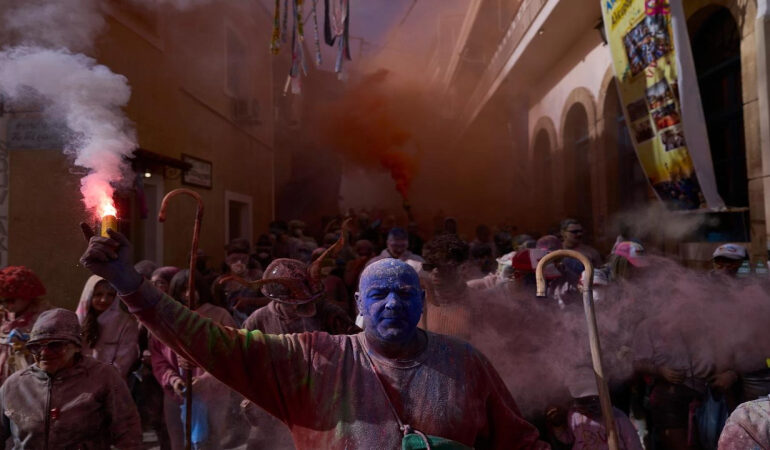

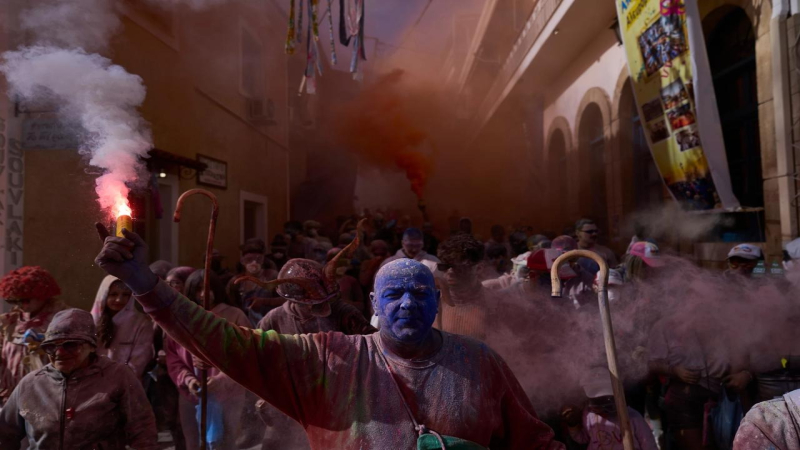
The seaside town of Galaxidi erupted in clouds of colored flour as residents and visitors celebrated Clean Monday, the Orthodox Christian holiday that marks the beginning of Lent. The annual flour war transformed the coastal road into a vibrant haze of reds, blues, and purples, signaling the end of carnival season and the start of the 40-day Lenten fast leading to Easter.
Participants gathered along the waterfront armed with bags of dyed flour, playfully pelting one another in a ritual that has become synonymous with the town’s identity. Within hours, streets, buildings, and revelers alike were covered in powder, while onlookers watched from balconies to avoid being caught in the crossfire.
Clean Monday holds deep religious significance in the Greek Orthodox Church. It marks a transition from festive carnival celebrations to a period of reflection, fasting, and spiritual preparation before Easter. Across Greece, families traditionally fly kites and share simple meals of shellfish and other seafood permitted during the Lenten fast.
In Galaxidi, however, the mood is notably exuberant. The flour war is believed to date back to the 19th century, when local sailors drew inspiration from similar festivities they had witnessed abroad, particularly in Mediterranean ports. At the time, Galaxidi was a thriving maritime hub, with merchant ships traveling across Europe and beyond.
Though the town later experienced economic decline and isolation, its distinctive customs endured. With a population of roughly 1,700 residents, Galaxidi has preserved traditions that blend maritime history with religious observance. The annual flour battle has become a key cultural attraction, drawing young visitors from across Greece eager to experience the spectacle.
Local participants describe the event as both playful and symbolic. While the town briefly descends into chaos, the celebration remains orderly and community focused. After the colorful clash subsides, residents clean the streets and prepare to enter the more solemn season of Lent.
Cultural historians note that many carnival traditions across Europe trace their origins to pre Christian customs later incorporated into the liturgical calendar. In Galaxidi’s case, the flour war has evolved into a uniquely local expression of festivity tied to the rhythm of the Orthodox year.
As the final bursts of color settled over the harbor, the town shifted from revelry to reflection. The flour war may last only a few hours, but it signals a deeper transition, inviting participants to move from exuberance into the spiritual discipline that defines the Lenten journey.