
Four Years On, Ukrainian Refugees Face Growing Hardship Far from Home
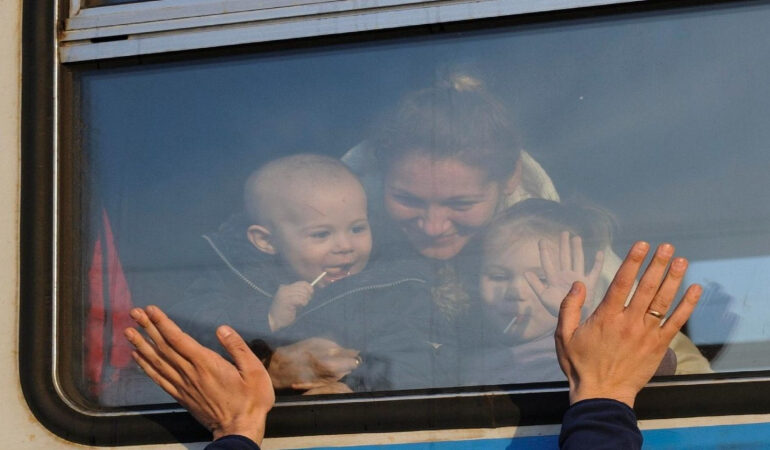

Four years into the war in Ukraine, nearly ten million people remain displaced from their homes, living either within the country’s borders or abroad. As the conflict enters its fifth year, the humanitarian toll continues to deepen, with civilians bearing the brunt of sustained attacks on cities and essential infrastructure.
According to the United Nations Human Rights Monitoring Mission in Ukraine, 2025 was the deadliest year for civilians since the start of the full scale invasion, with more than 2500 people killed and over 12000 injured. Repeated strikes on homes, schools, hospitals and energy facilities have left entire communities struggling to access electricity, heating and medical care.
Of the nearly ten million Ukrainians living away from their homes, approximately 3.7 million are internally displaced, having fled frontline areas but remaining within Ukraine. Another 5.9 million have sought refuge abroad. European countries continue to host the majority of those who have left, and Eurostat data show that in 2025 the European Union and associated Schengen states granted around 670000 temporary protection permits to Ukrainian citizens. This represented a 12 percent decrease compared to the previous year, though the need for protection remains significant.
Inside Ukraine, humanitarian agencies estimate that at least eleven million people require assistance. Basic needs such as food, shelter, healthcare and psychological support remain urgent. Many internally displaced families have relocated to regions like Kharkiv and Dnipro in an effort to stay close to their original homes, while Kyiv continues to receive a steady influx of people seeking relative safety. Housing shortages are particularly acute for elderly individuals and vulnerable groups.
For refugees abroad, integration presents additional challenges. In countries such as Italy, many Ukrainians have not demonstrated a long term intention to settle permanently. Children often continue to follow Ukrainian school curricula online, and language acquisition in host countries can remain limited. Administrative barriers, including incomplete registration in local municipal systems, can restrict access to social services and housing subsidies, leaving many reliant on informal networks of support.
The psychological toll is increasingly visible. Humanitarian assessments indicate that 42 percent of refugees report mental health difficulties, with higher rates among older people, those with chronic illnesses and single parent households. While many continue to work and send their children to school despite daily uncertainty, aid organizations caution against viewing this resilience as a sign that needs are diminishing.
Despite the hardship, the desire to return home remains strong. Around 1.4 million refugees have returned to Ukraine for at least three months, and recent surveys suggest that 61 percent of refugees abroad and 73 percent of internally displaced persons hope to go back permanently when conditions allow. However, financial constraints and reduced international funding are limiting reconstruction efforts, even as thousands of damaged homes have already been repaired.