
Fr Pasolini Says Fraternity Is a Responsibility in a World Marked by War and Division
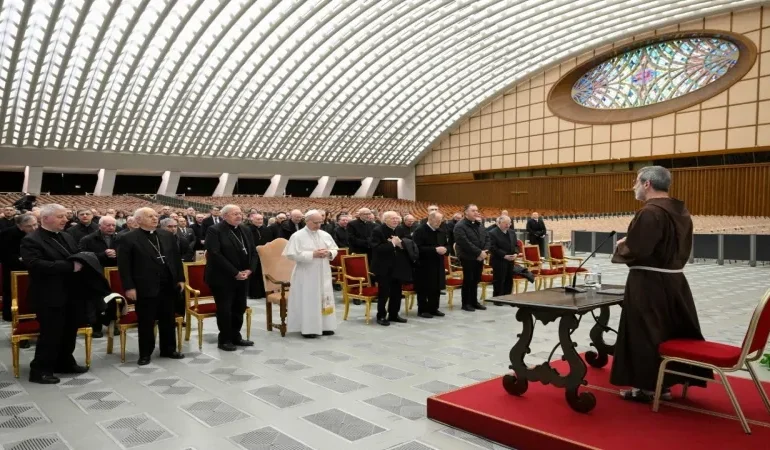

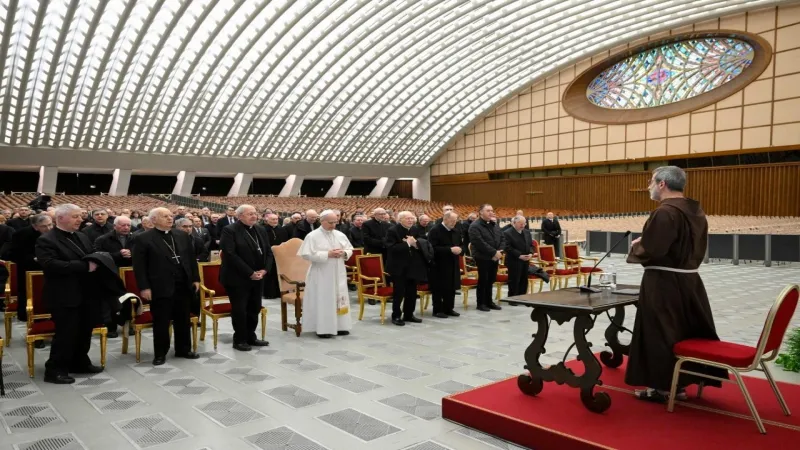
The Preacher of the Papal Household Father Roberto Pasolini delivered the second Lenten meditation for the Roman Curia in the presence of Pope Leo XIV, emphasizing that fraternity must be understood not simply as an ideal but as a responsibility for Christians. The reflection took place in the Vatican’s Paul VI Hall and formed part of a series of spiritual meditations offered during Lent to Church leaders. Speaking on the theme of renewal in Christ, Father Pasolini explained that genuine Christian life requires a commitment to fraternal communion even in a world deeply affected by conflict, division and violence.
During the meditation Father Pasolini explained that fraternity is not an optional element of spiritual life but a central space where personal conversion takes place. According to the Capuchin friar relationships with others represent the most authentic test of faith because they reveal whether the Gospel is truly transforming a person’s heart. He said Christian communities should not be seen as places of comfort or refuge but as environments where individuals confront their weaknesses and grow in love. In this way fraternity becomes a sign of the Gospel’s power to reshape human relationships and guide believers toward deeper spiritual maturity.
Drawing inspiration from the early Franciscan communities founded by Saint Francis of Assisi, Father Pasolini reflected on a vision of brotherhood free from structures of power or dominance. He explained that Francis wanted his followers to live in relationships marked by equality and mutual responsibility similar to those of the earliest Christian communities. In this perspective brothers and sisters in faith are not simply companions who support one another but individuals entrusted to each other so that their lives may be transformed through shared experiences of faith and humility.
The preacher also reflected on the meaning of the word brother which comes from the Greek term adelphos meaning one who comes from the same womb. He explained that this understanding of brotherhood invites Christians to recognize a profound bond with others even when differences or tensions arise. According to Father Pasolini encounters with others often challenge personal pride and reveal hidden resentments but they also create opportunities for spiritual growth. By accepting the presence of others with their strengths and weaknesses believers learn to open their hearts more deeply to love and compassion.
To illustrate the difficulties that arise within human relationships the preacher referred to the biblical story of Cain and Abel. He suggested that the conflict between the two brothers reflects a deeper struggle within every person when jealousy or resentment begins to dominate the heart. Father Pasolini said the story shows that division often begins when individuals fail to recognize the value of their own lives as gifts. Rather than condemning Cain the biblical narrative reveals God inviting him to rediscover the possibility that his life too could become an offering shaped by generosity and trust.
Father Pasolini emphasized that the Christian response to broken relationships must be guided by mercy rather than self defense. Referring to the teachings of Saint Francis and the example found in the New Testament letter to Philemon he explained that the Gospel calls believers to seek reconciliation even when relationships are wounded. Instead of seeing others as adversaries or debtors Christians are invited to rediscover them as brothers and sisters loved by God. Such an approach he said reflects the heart of the Gospel and offers a path toward healing divisions within communities.
The preacher concluded by reminding listeners that the message of Lent invites believers to rediscover the gift and responsibility of fraternity. In a world marked by wars and social tensions Christians are called to embody a different way of living that reflects the hope of the Resurrection. According to Father Pasolini faith teaches that no person should be excluded from the human heart and that the effort required to sustain relationships is never meaningless. He encouraged Christians to see fraternity not only as a spiritual gift but also as an urgent responsibility for the life of the Church and the wider world.