

Franciscan Brother in Beirut Appeals for Peace as Violence in Lebanon Spreads Fear Across Communities
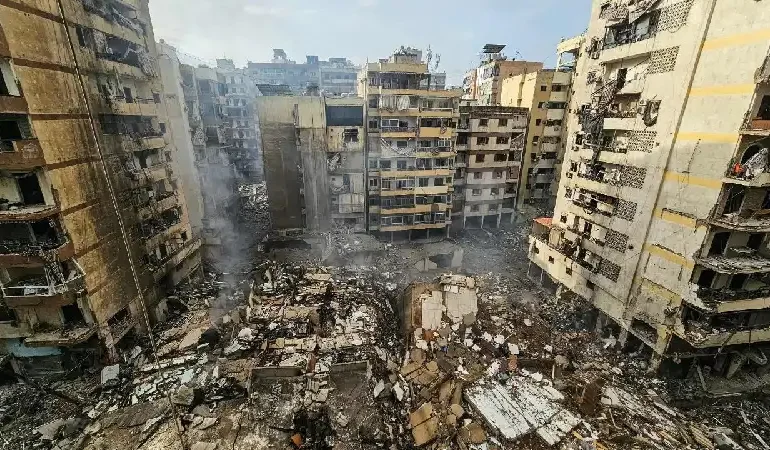

Lebanon’s fragile social fabric is facing renewed strain as violence and air strikes intensify across parts of the country, pushing civilians into uncertainty and fear. In Beirut, Franciscan Brother Tony Choukri, Guardian of the Monastery of St. Joseph in the historic Gemmayzeh district, has urged the international community and regional actors to recognize the human cost of the conflict and pursue peace. He warned that violence does not represent the values or traditions of Lebanese society, where Christians and Muslims have long lived together. According to the Franciscan brother, the growing cycle of retaliation risks replacing coexistence with resentment and insecurity among communities that once shared daily life and cultural ties.
The Franciscan monastery in Beirut has become an important refuge during the escalating tensions. The building stands in one of the city’s oldest districts, an area that once attracted visitors for its cultural life and historic streets but now lives under the shadow of fear. Brother Choukri explained that the monastery has remained open to those seeking safety, even as the surrounding neighborhoods feel the pressure of nearby strikes. The friars have stayed in the monastery despite the risks, continuing a long tradition of presence in the heart of the community. Many people trust the monastery as a place of stability because the religious community has remained there through past crises and national tragedies.
The monastery itself carries the memory of Lebanon’s modern history. It survived the devastating explosion that destroyed large parts of Beirut’s port district in 2020 and has stood through decades of political instability and conflict that have shaped the country since the 1970s. Today that history feels painfully close again. According to Brother Choukri, the expanding geography of violence has left people feeling that no location is truly protected. While many initially believed the attacks would remain confined to the southern border regions, recent developments have shown that strikes can occur far beyond those areas, spreading anxiety across cities and towns.
Despite these conditions, the monastery continues to shelter displaced families who have fled from more heavily affected regions. Around one hundred and fifty people are currently staying there, including many children and elderly residents. The atmosphere is marked by constant tension as residents remain alert to sudden noises that may signal danger. Brother Choukri described how young children often run to hide when they hear sounds that resemble explosions or gunfire. The Franciscan community is now trying to identify safer locations for the most vulnerable individuals while continuing to provide food, shelter, and emotional support for those who remain within the monastery walls.
Brother Choukri has spoken openly about the moral and spiritual dimensions of the crisis. He emphasized that violence cannot be justified as a strategy to reshape borders, demographic realities, or political influence. In his words, human life cannot be treated as an instrument of conflict. He stressed that faith teaches respect for human dignity and that no one has been granted the authority to take innocent lives. His appeal reflects the broader position often expressed by Christian leaders in the region who call for adherence to international law, protection of civilians, and renewed diplomatic efforts to end cycles of violence.
Lebanon has long been known for its diverse religious and cultural composition, with multiple faith communities sharing the same neighborhoods, institutions, and traditions. This coexistence has often been described by local leaders as a delicate but resilient fabric that defines the country’s identity. Brother Choukri explained that the Lebanese people themselves do not see their society as divided groups but as a single social tapestry shaped by generations of coexistence. The current wave of violence therefore feels particularly painful because it contradicts the spirit of unity that many citizens believe defines the nation.
The Franciscan presence in Lebanon is part of a broader mission linked to the Custody of the Holy Land, a centuries old Franciscan institution responsible for supporting Christian communities across parts of the Middle East. Monasteries and churches connected to this mission often play humanitarian roles during periods of crisis, offering shelter, distributing aid, and coordinating assistance networks. Over the years, the Monastery of St. Joseph has served as a point of departure for humanitarian initiatives, including support for refugees displaced by the Syrian conflict. That legacy continues today as the monastery adapts to the needs of people affected by the current violence.
While uncertainty continues to shape daily life in Beirut, the Franciscan community says it will remain present alongside the people it serves. Brother Choukri and the friars have made it clear that they do not intend to abandon their mission or leave the neighborhood despite the risks. Their decision reflects a commitment to solidarity with the wider community during one of the most difficult periods in recent years. At the same time, local religious leaders and humanitarian workers are calling for urgent international attention to the humanitarian impact of the conflict and for renewed efforts to prevent further suffering among civilians across Lebanon.