
Georgetown Qatar Campus Closes as Iran Threatens US Linked Universities Amid Escalating Conflict

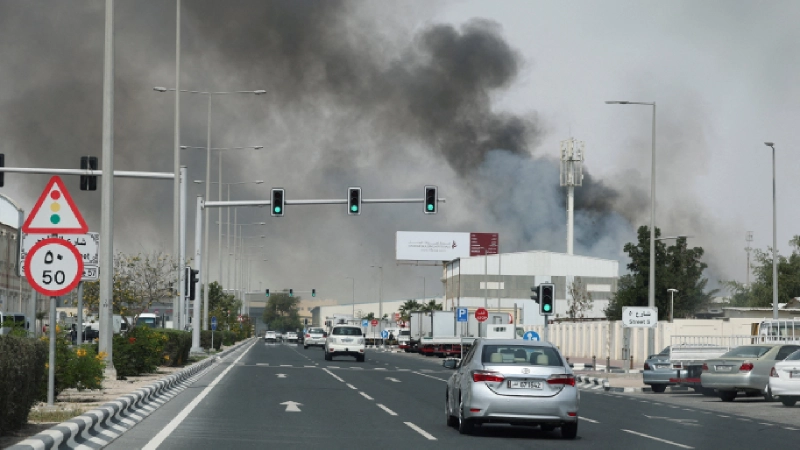
Georgetown University’s campus in Doha has suspended physical operations as regional tensions intensify, following direct threats from Iran targeting American affiliated institutions across West Asia. The university confirmed that its campus will remain closed until further notice, shifting all academic activities online as a precautionary measure. The decision reflects growing security concerns as the conflict involving the United States, Israel and Iran expands, placing civilian institutions, including educational centers, at increased risk amid rising geopolitical instability.
The escalation follows statements from Iran’s Islamic Revolutionary Guard Corps, which warned that American universities in the region could be considered legitimate targets in response to recent military strikes on Iranian academic institutions. These threats came after Israeli airstrikes reportedly hit universities in Tehran and Isfahan, which Israel claims are linked to military and research programs. Iranian officials have framed these attacks as assaults on the country’s scientific infrastructure, further intensifying rhetoric and raising fears of broader retaliation across the region.
Georgetown’s leadership emphasized that the safety of students, faculty and staff remains the highest priority as decisions are made in response to rapidly changing conditions. Administrators confirmed that they are closely coordinating with local authorities and the university’s main campus in Washington to assess risks and determine next steps. The shift to online learning highlights how educational institutions are adapting to conflict environments, balancing continuity of education with the need to protect their communities from potential threats.
The situation underscores the growing vulnerability of civilian institutions during times of conflict, particularly universities that may be perceived as symbolic or strategic targets. Under international humanitarian law, attacks on civilian infrastructure such as schools are considered violations, yet modern conflicts have increasingly blurred the lines between military and civilian spaces. Analysts warn that the targeting of educational institutions could have long term consequences, disrupting academic systems and undermining global knowledge exchange.
As tensions continue to rise, the closure of Georgetown’s Qatar campus illustrates the broader impact of geopolitical conflict on global education networks. The incident reflects a shift in how war affects not only military and political structures but also academic and cultural institutions. With uncertainty surrounding future developments, universities across the region may face increasing pressure to reassess security protocols and operational strategies in response to an evolving and unpredictable conflict landscape.