
Global Catholic Opinion Is Shifting But Not Where Many Assume

Conversations about Catholic opinion often assume a simple narrative of decline or polarization. Headlines tend to focus on visible controversies, framing global Catholic attitudes as uniformly moving away from tradition or authority. Yet a closer look at how opinion is actually shifting reveals a more complex and less predictable picture. Change is occurring, but not always in the directions many commentators expect.
Across regions, Catholic opinion is evolving unevenly, shaped by culture, history, and lived experience. While some attitudes are becoming more fluid, others are hardening around core beliefs. This uneven movement challenges assumptions that the global Church is drifting in a single direction. Instead, Catholic opinion is becoming more differentiated, not more uniform.
Beyond the Assumption of Linear Change
One common assumption is that Catholic opinion moves steadily toward secular norms. In reality, shifts tend to be selective rather than comprehensive. Catholics may express openness on certain social questions while remaining deeply committed to doctrinal identity and sacramental life.
This selective change reflects how belief is lived rather than abstractly held. Many Catholics distinguish between institutional critique and personal faith. Dissatisfaction with leadership or governance does not necessarily translate into rejection of belief. In some cases, criticism coexists with strong attachment to Catholic identity.
Opinion, therefore, is not simply moving away from tradition. It is being reshaped by experience, trust, and perceived credibility rather than ideology alone.
Regional Differences Matter More Than Ever
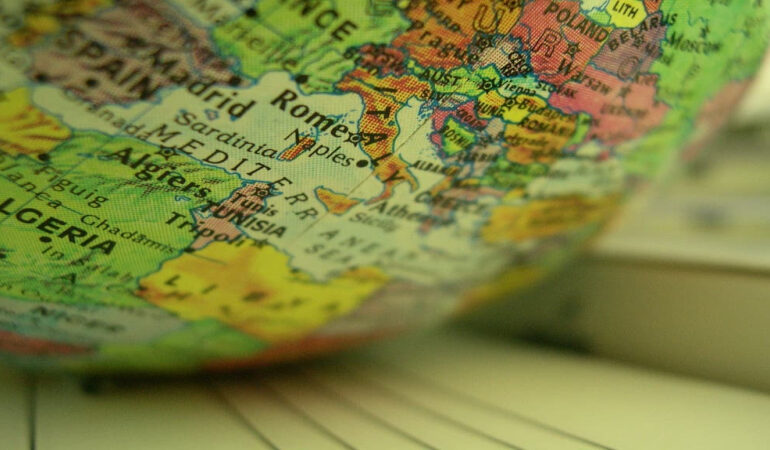
Global Catholic opinion cannot be understood as a single conversation. Attitudes vary significantly across regions, influenced by social stability, political pressure, and cultural norms. In some regions, Catholic identity remains closely tied to community life and moral authority. In others, it is negotiated within pluralistic environments.
These differences mean that trends observed in one part of the world cannot be easily generalized. What appears as liberalization in one context may reflect survival strategies in another. Similarly, strong adherence to doctrine in some regions reflects lived reliance on faith rather than resistance to change.
As a result, global opinion is fragmenting along contextual lines rather than converging toward a single outlook. This fragmentation complicates efforts to interpret polling or public sentiment through simple categories.
Trust, Credibility, and Institutional Perception
One of the most significant drivers of opinion change is trust. Catholics increasingly distinguish between belief and institutional confidence. Trust in Church leadership fluctuates more than attachment to faith itself. This distinction helps explain why participation and belief often move differently than approval of governance.
Where leadership is perceived as transparent and responsive, confidence tends to remain stable even amid disagreement. Where credibility is weakened, opinion becomes more critical without necessarily abandoning belief. This dynamic explains why shifts in opinion are not always ideological but relational.
Institutional perception matters deeply. Catholics respond not only to what the Church teaches, but to how it governs and communicates. Opinion shifts reflect this lived assessment more than abstract theological disagreement.
What Polls Often Miss
Public discussions of Catholic opinion often rely heavily on polling data. While useful, such data can miss nuance. Polls capture responses at a moment in time, but faith is shaped by habit, community, and long term identity. Opinions expressed in surveys do not always translate into disengagement or rejection.
Many Catholics hold tensions rather than settled positions. They may express uncertainty while continuing to practice faith. They may disagree with certain teachings while remaining committed to sacramental life. Polls tend to flatten these complexities.
Understanding Catholic opinion requires attention to practice as well as attitude. Attendance, prayer, and community involvement often tell a different story than headline statistics.
Shifts Toward Identity and Meaning
One area where opinion is quietly shifting is toward questions of identity and meaning. In a fragmented cultural environment, many Catholics are re engaging with faith as a source of coherence rather than moral conformity. This trend cuts across ideological lines.
Rather than focusing on institutional alignment, many believers prioritize whether faith offers purpose and moral grounding. This explains renewed interest in spirituality, tradition, and community even among those critical of certain structures.
Such shifts suggest that Catholic opinion is not dissolving, but reorienting. Faith is increasingly valued for its capacity to anchor identity in uncertain times.
Implications for Church Leadership
For Church leadership, these patterns carry important implications. Assumptions about decline or uniform change risk misreading the faithful. Effective engagement requires recognizing diversity of opinion without assuming erosion of belief.
Listening remains essential, but so does clarity. When leadership addresses trust, transparency, and coherence, it responds to the actual sources of opinion shift rather than perceived ideological trends.
Understanding where opinion is shifting, and where it is not, allows the Church to engage more faithfully with its global community.
Conclusion
Global Catholic opinion is changing, but not along the simple lines many assume. Rather than moving uniformly away from belief, attitudes are becoming more nuanced, shaped by trust, context, and identity. Recognizing this complexity offers a clearer picture of a global Church navigating change without losing its core.