Greenland’s Catholic Priest Urges Respect for People Beyond Geopolitics
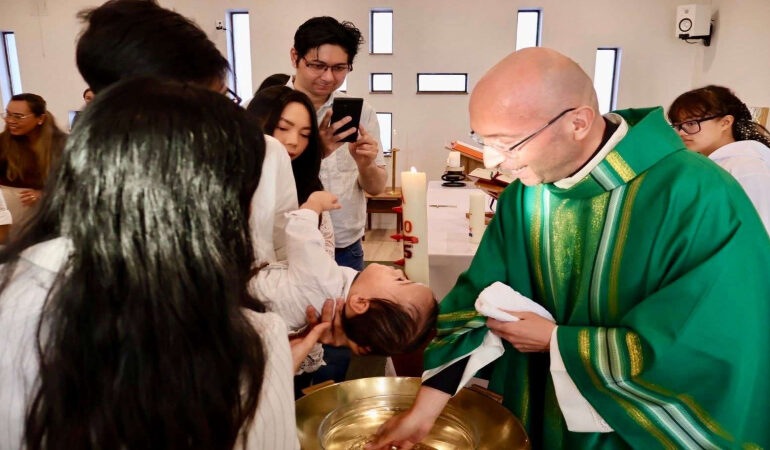

In one of the world’s most remote and stark landscapes, a small Catholic community in Greenland gathers around its sole priest, who has become an attentive listener to growing unease among local residents. Based in Nuuk, the capital, Father Tomaž Majcen ministers to roughly eight hundred Catholics scattered across the vast Arctic territory, celebrating daily Mass and traveling long distances to reach the faithful. Most members of the community are immigrants, though a small number are native Greenlanders, united by parish life shaped by isolation, extreme climate, and quiet resilience. In recent months, however, global political attention has introduced a new anxiety, as international debates increasingly frame Greenland in terms of strategic value rather than as a living society rooted in family, culture, and shared history.
Father Majcen, a Conventual Franciscan originally from Slovenia, says recent public statements abroad about Greenland’s strategic importance have unsettled many people, even if reactions remain understated. In a society marked by reserve rather than protest, fear often manifests quietly. Parishioners, he explains, speak less of political outcomes and more of how such rhetoric makes them feel overlooked and diminished. From their perspective, discussions of control, resources, and military positioning seem disconnected from everyday life, which revolves around work, weather, community bonds, and survival in an unforgiving environment. As a priest, he says, his role is to listen and to recognize the emotional weight carried by words spoken far away but felt deeply at home.
Greenland’s growing prominence is tied to climate change and geopolitics, as melting ice opens new Arctic routes and draws attention to untapped resources beneath the ground. Yet Father Majcen cautions that such conversations often ignore the human dimension. With a population of about fifty seven thousand, the island already faces serious social challenges, including high rates of suicide and alcoholism. In that fragile context, uncertainty fueled by external political debate can further erode trust and stability. He notes that people sometimes ask whether their voices matter or whether they are seen merely as bargaining chips. These questions, he says, strike at the heart of human dignity and underscore the need for pastoral care that restores a sense of worth and belonging.
Beyond geopolitics, the priest also points to environmental responsibility as central to Greenland’s future. Recent decisions by local authorities to limit new hydrocarbon exploration reflect both ecological concern and respect for traditional livelihoods such as fishing and tourism. For Father Majcen, care for the Arctic environment is inseparable from faith, as it honors both creation and the people who depend on it. He has also welcomed ecumenical solidarity, noting prayer initiatives led by the Lutheran majority as a sign of shared Christian concern for peace. In moments of tension, he says, unity and prayer offer calm and perspective. His hope for Greenland remains simple yet profound: that its people are treated with respect, that their dignity is recognized, and that fear does not define the island’s future.