

Hidden Roman Cloister Reveals Layers of Church History and Cultural Legacy
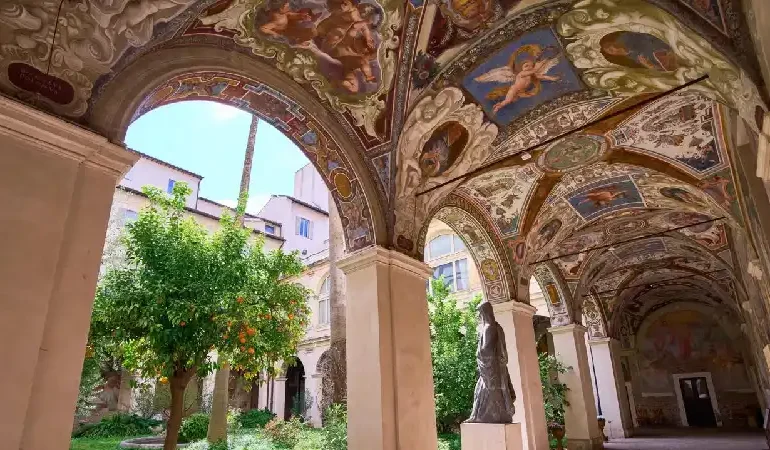

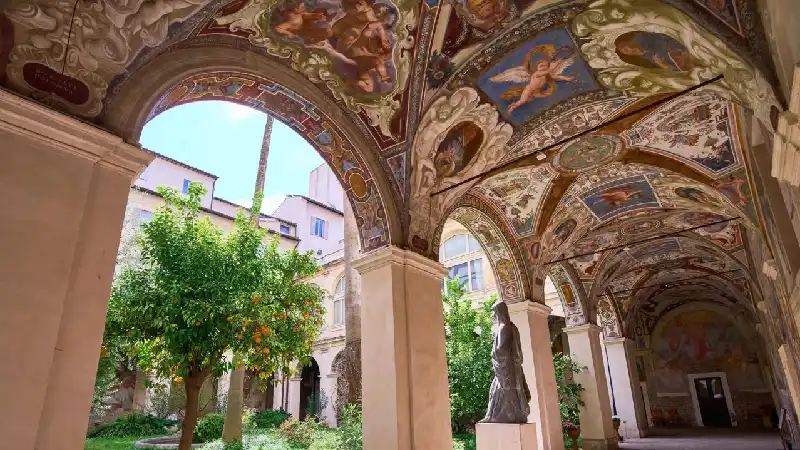
A secluded cloister in the heart of Rome is drawing renewed attention for its rich historical significance and its connection to pivotal moments in Church history. Located near one of the city’s most visited landmarks, the space remains largely unknown to the public, offering a quiet environment for reflection and prayer. Behind its walls lies a centuries old setting that has witnessed both spiritual life and major historical events, reflecting the complex role of religious institutions in shaping cultural and intellectual history across generations.
The cloister is part of a basilica built over the remains of an ancient Roman temple, illustrating the transformation of religious spaces over time. Originally a gathering place in classical antiquity, the site later became a center for Dominican life and scholarship. Over the centuries, it has hosted significant figures associated with faith, art, and intellectual thought. The architectural and artistic features, including frescoes and symbolic imagery, were designed to support contemplative life while also preserving narratives of the past within its walls.
Beyond its peaceful appearance, the site holds a more turbulent history linked to the activities of the Roman Inquisition. It was within this complex that notable historical figures were questioned and judged, including the well known case involving early scientific ideas that challenged prevailing beliefs. These events reflect a period in which religious authority intersected with intellectual inquiry, shaping debates that would influence both theology and science. The presence of such history within a place of prayer highlights the dual nature of the Church’s past.
The cloister also played a role in the governance of the Church, having hosted papal conclaves that led to the election of new popes during the medieval period. Its connection to important figures in religious history further strengthens its significance as a site where spiritual, cultural, and institutional developments converged. The surrounding basilica continues to house the remains of influential individuals, reinforcing its role as a place of memory and continuity within the Catholic tradition.
Today, the cloister remains a living space where a small community of friars continues its daily rhythm of prayer and service. While largely hidden from the crowds that pass nearby, it stands as a reminder of the layered history embedded within Rome. Its preserved environment offers insight into how spaces can carry both moments of peace and episodes of conflict, reflecting the broader journey of the Church through time and its ongoing presence within the cultural fabric of the city.