
Holy See Warns Christians Are the Most Persecuted Religious Community Worldwide
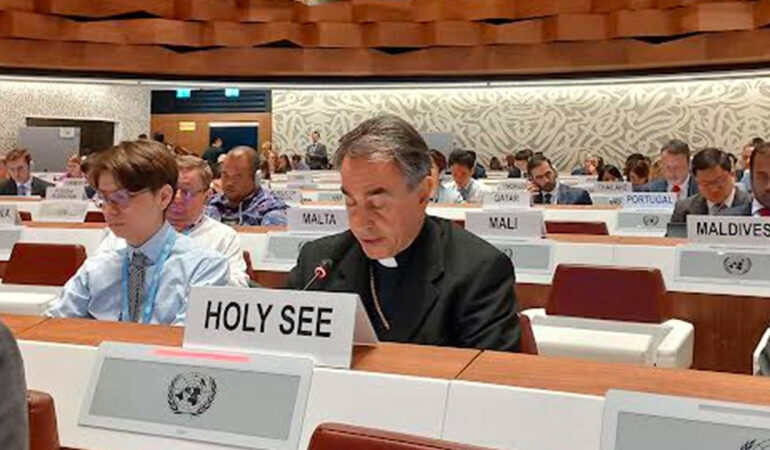

The Holy See has raised renewed concerns about the growing persecution faced by Christians around the world, warning that millions continue to experience violence, discrimination, and restrictions on their religious freedom. Speaking at an international gathering in Geneva, Archbishop Ettore Balestrero, the Holy See’s Permanent Observer to the United Nations and other international organizations, urged governments to uphold their responsibility to protect freedom of religion for all believers.
Addressing participants at the event titled Standing with Persecuted Christians Defending the Faith and Christian Values on March 3, Archbishop Balestrero highlighted the scale of the crisis affecting Christian communities globally. He stated that nearly 400 million Christians currently face persecution or violence because of their faith. According to the figures presented, this means that roughly one in every seven Christians worldwide is impacted by some form of religious oppression.
The Archbishop also pointed to the continuing loss of life linked to religious persecution. Nearly 5,000 Christians were reportedly killed for their faith in 2025 alone. This number represents an average of approximately 13 deaths each day connected to religious violence. He explained that within Christian tradition, those who die because of their faith are recognized as martyrs who bear witness to their beliefs, while from the perspective of international law they are victims of severe human rights violations.
Archbishop Balestrero stressed that these tragedies highlight a deeper issue involving the responsibility of governments. He said that states have a duty not only to acknowledge these violations but also to ensure that believers are protected before, during, and after attacks occur. He emphasized that the persistence of impunity remains one of the most serious challenges in confronting religious persecution across the world.
Freedom of religion, he noted, is not simply a moral principle but a fundamental human right recognized under international law. Governments therefore have the obligation to guarantee that individuals and communities can practice their faith openly and safely. This includes protecting religious expression in private and public life through worship, teaching, and community practices.
The Archbishop also drew attention to the many forms that persecution can take. In some parts of the world, Christians face physical violence, imprisonment, forced displacement, confiscation of property, or even enslavement because of their beliefs. These forms of persecution are often highly visible and widely reported, but they are not the only threats affecting Christian communities.
He warned that discrimination can also occur in quieter and less visible ways. Subtle forms of persecution may include social marginalization, professional exclusion, and legal restrictions that gradually limit religious expression. Such pressures may not always appear in official statistics but still have significant consequences for believers and their communities.
Europe was cited as an example where religious hostility has increasingly been documented. Reports show that more than 760 anti Christian hate crimes were recorded in 2024, including acts such as vandalism, arson attacks on churches, and physical assaults. In addition, more than 2,200 violent incidents involving Christians were recorded across the continent during the same period.
Archbishop Balestrero warned that in some Western societies, rights guaranteed under international human rights frameworks are occasionally overshadowed by competing political or ideological claims. In certain cases, believers have faced legal actions for activities such as silent prayer near abortion facilities or for publicly quoting passages from the Bible on social issues.
The Archbishop said these situations represent serious violations of fundamental freedoms, particularly when actions against believers are carried out by authorities responsible for safeguarding human rights. He stressed that governments must ensure that legal protections for religious freedom are applied consistently and fairly across all societies.